Architecture
Ma Yansong × Tencent
Architect:
Ma Yansong, Dang Qun, Yosuke Hayano
Place:
Shenzhen, Cina
Year:
2026
Photographer:
AOGVision, Zhang Chao, Zhu Yumeng, Sun Haiyong
A Corporate Campus Opens to All
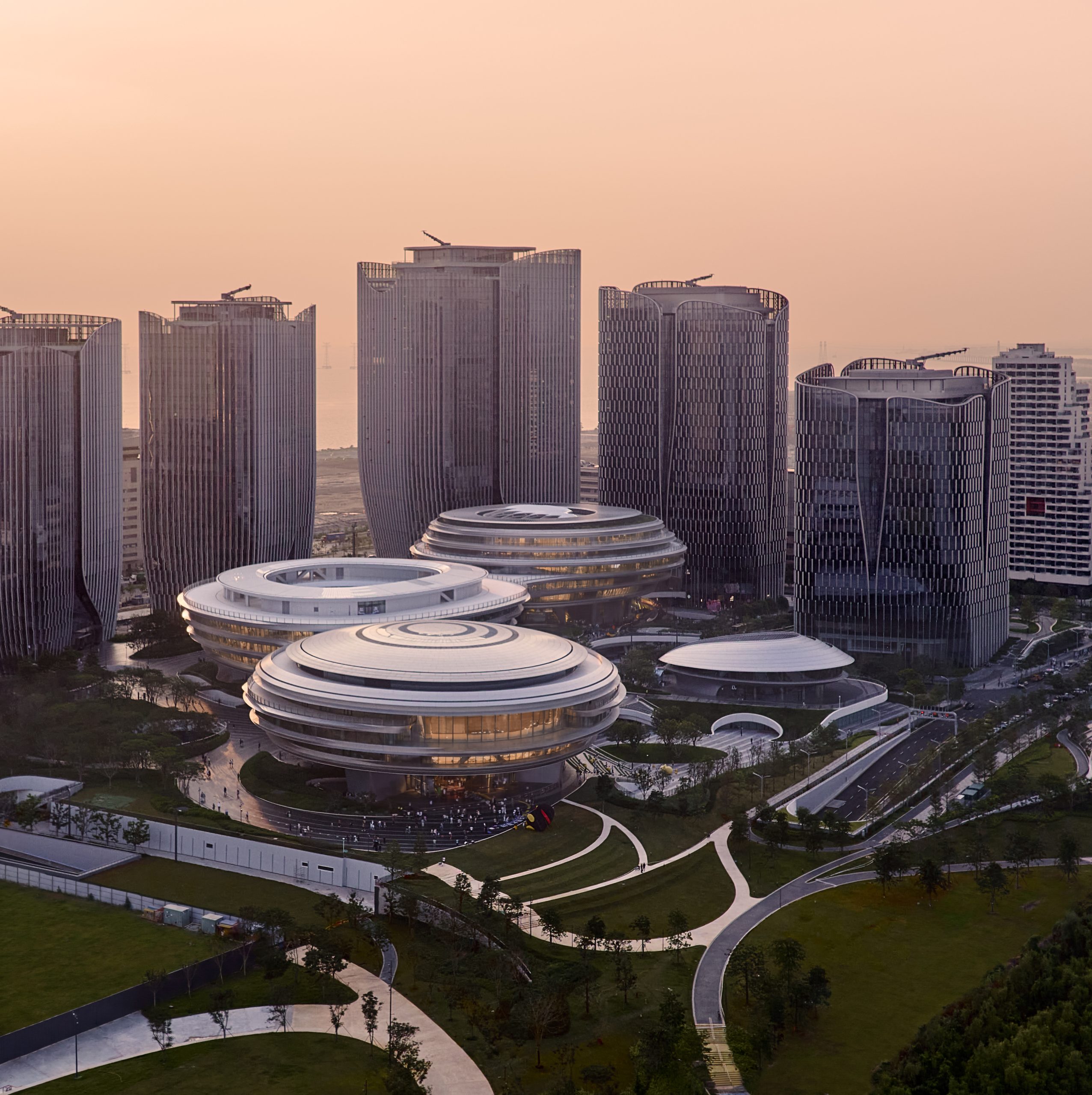
MAD Completes Tengyun Center (Tencent Cloudrise), the lifted core building complex at Tencent’s Headquarters Campus
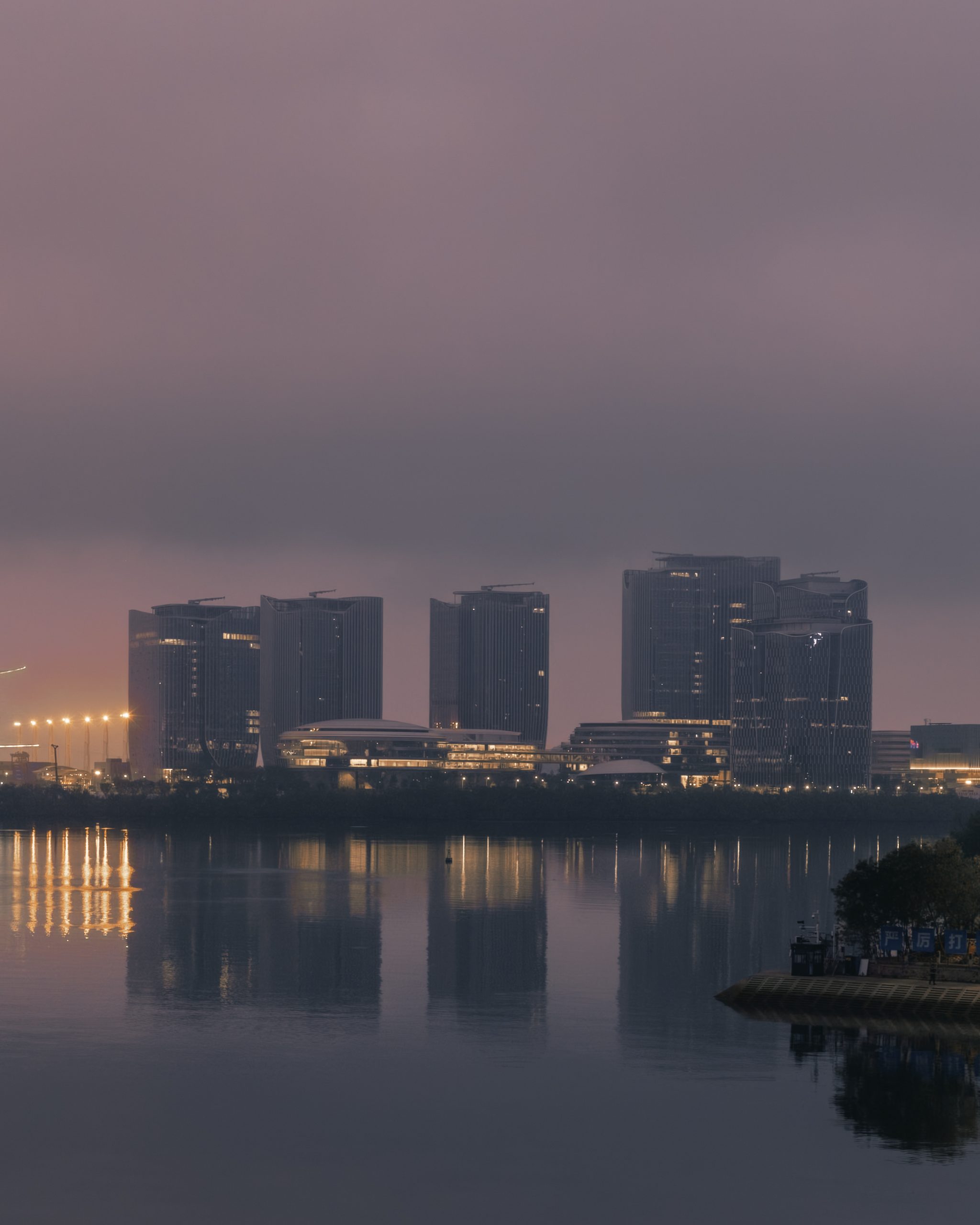
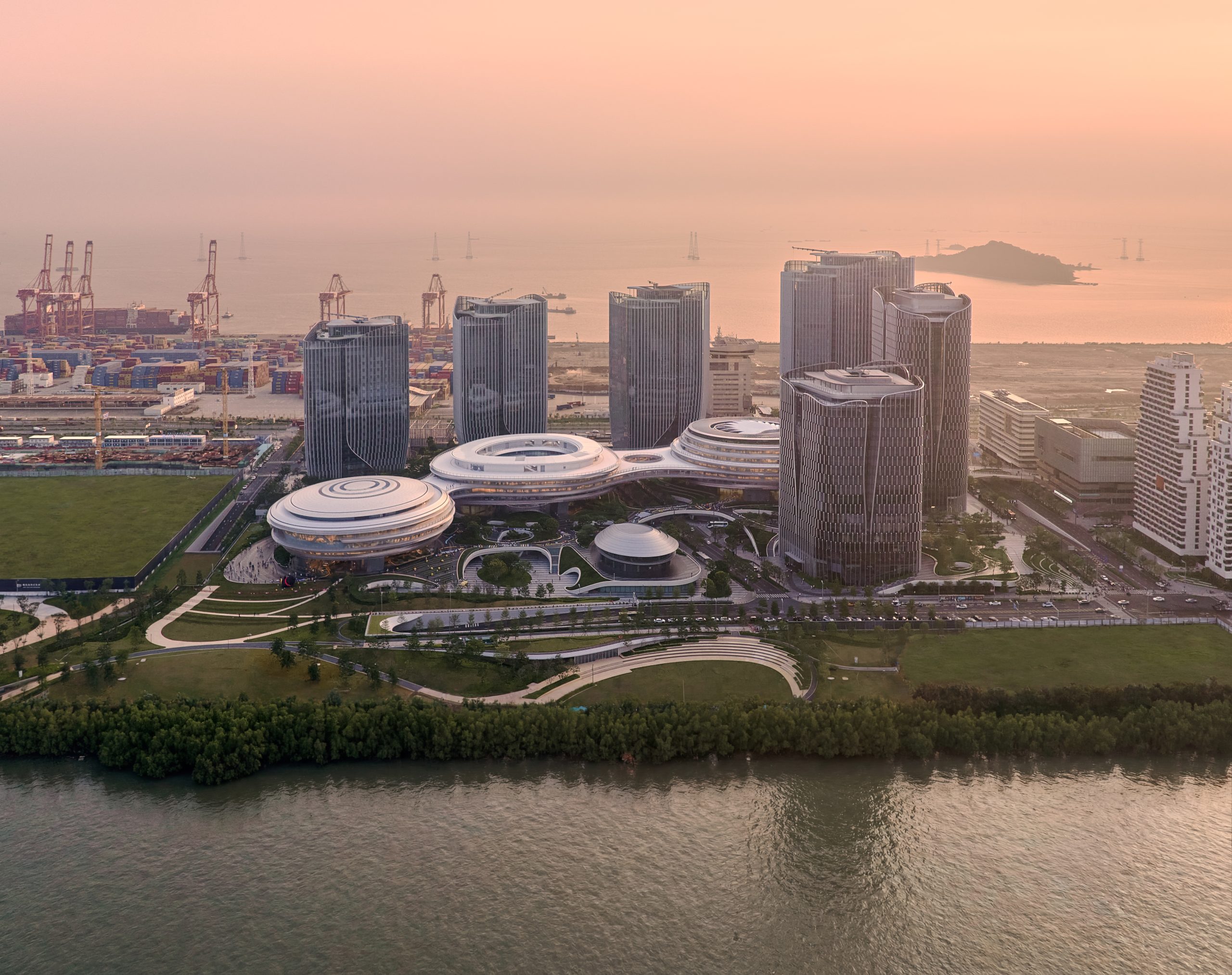
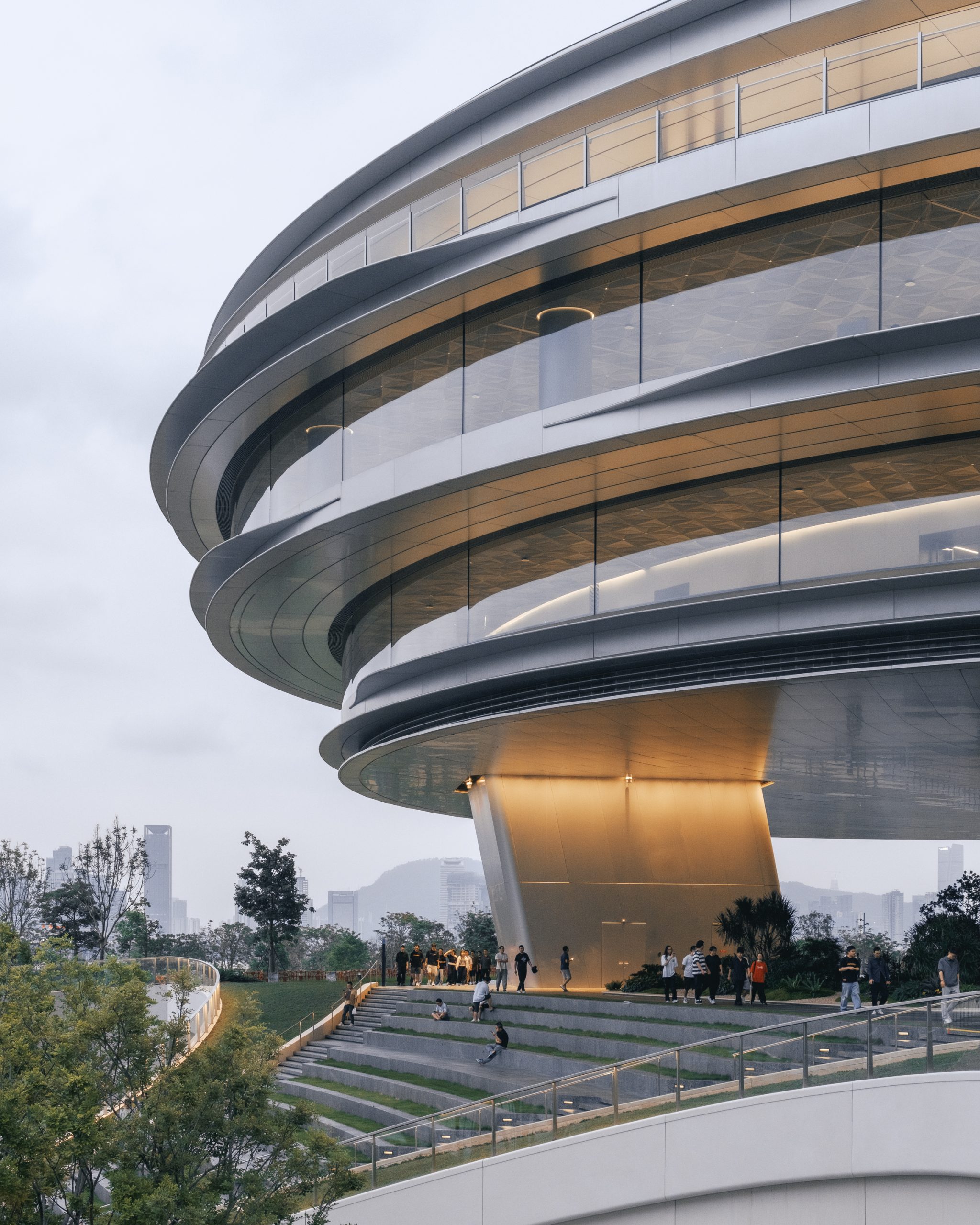
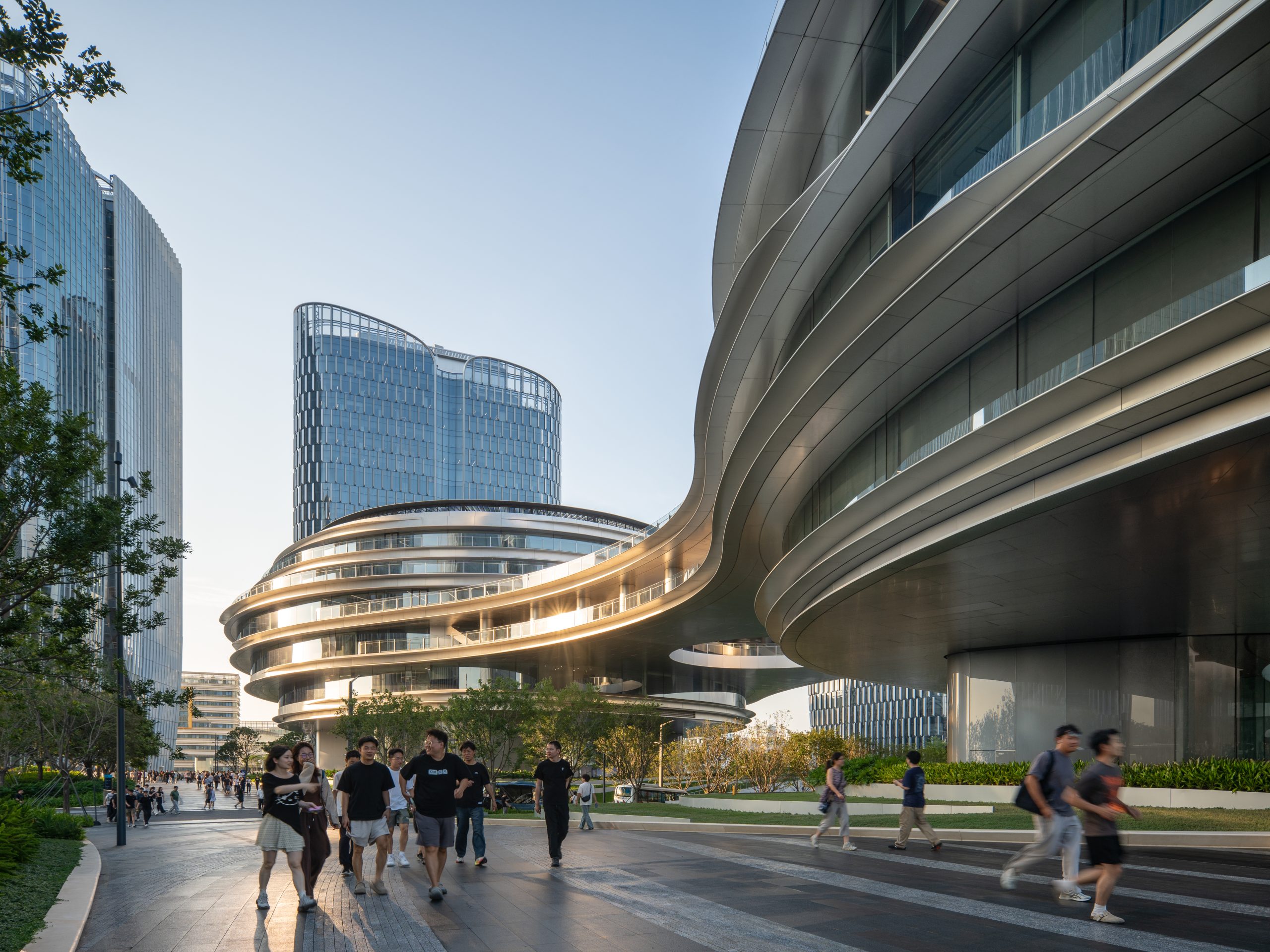
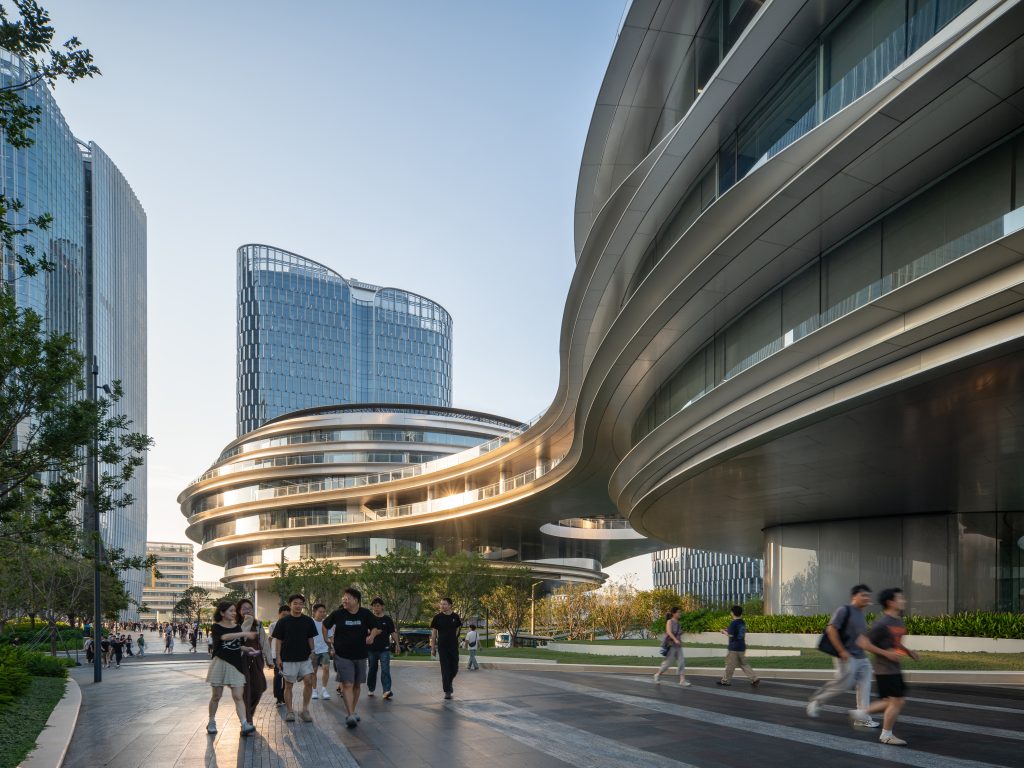
The world’s most celebrated technology headquarters tend to share one instinct: to turn inward. They perfect a self-contained world for their employees, while the public stays at the gate. Tencent’s new headquarters takes the opposite approach. Designed by MAD, led by Ma Yansong, Dang Qun, and Yosuke Hayano, Tengyun Center (Tencent Cloudrise) lifts its entire main mass roughly 8.6 meters into the air and gives the ground beneath it back to the city. There are no walls. The land under the building is open to anyone: a coastal public space that pedestrians, families, and passers-by can move through without ever entering the company.Completed in Shenzhen’s Da Chan Bay and now open as part of Tencent’s broader campus, the project reframes one of the most guarded building types in the world, the corporate headquarters, as a piece of public infrastructure.
“Floating is not a visual effect, it’s a spatial idea. By lifting the headquarters, we give the ground back to the city. It’s not about making a closed-off corporate icon, but about letting the building become part of everyday urban life. In this sense, ‘floating’ is simply a way to make public space more open and accessible.”
— Ma Yansong, Founder and Principal Partner, MAD
Lifting the campus, opening the ground
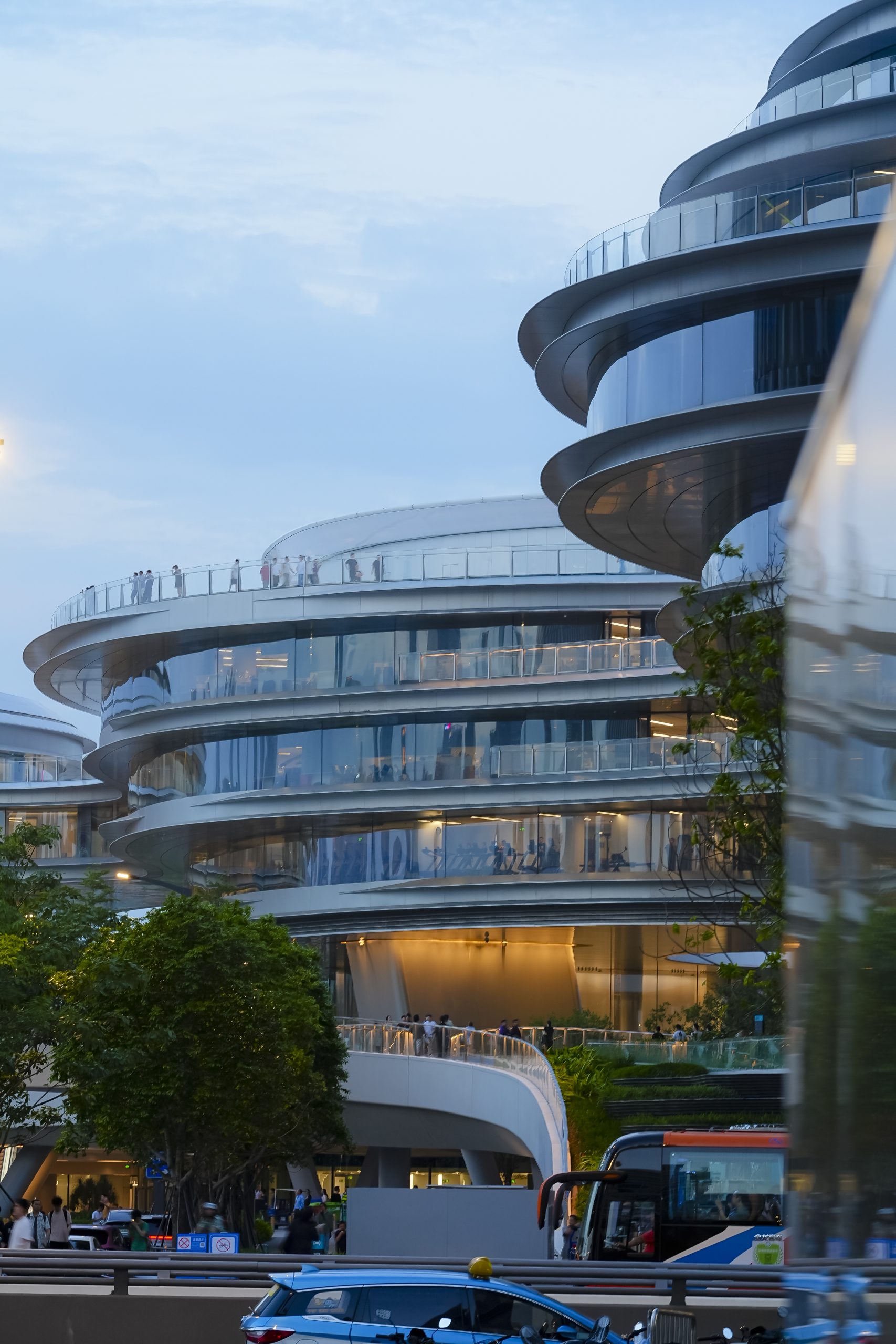
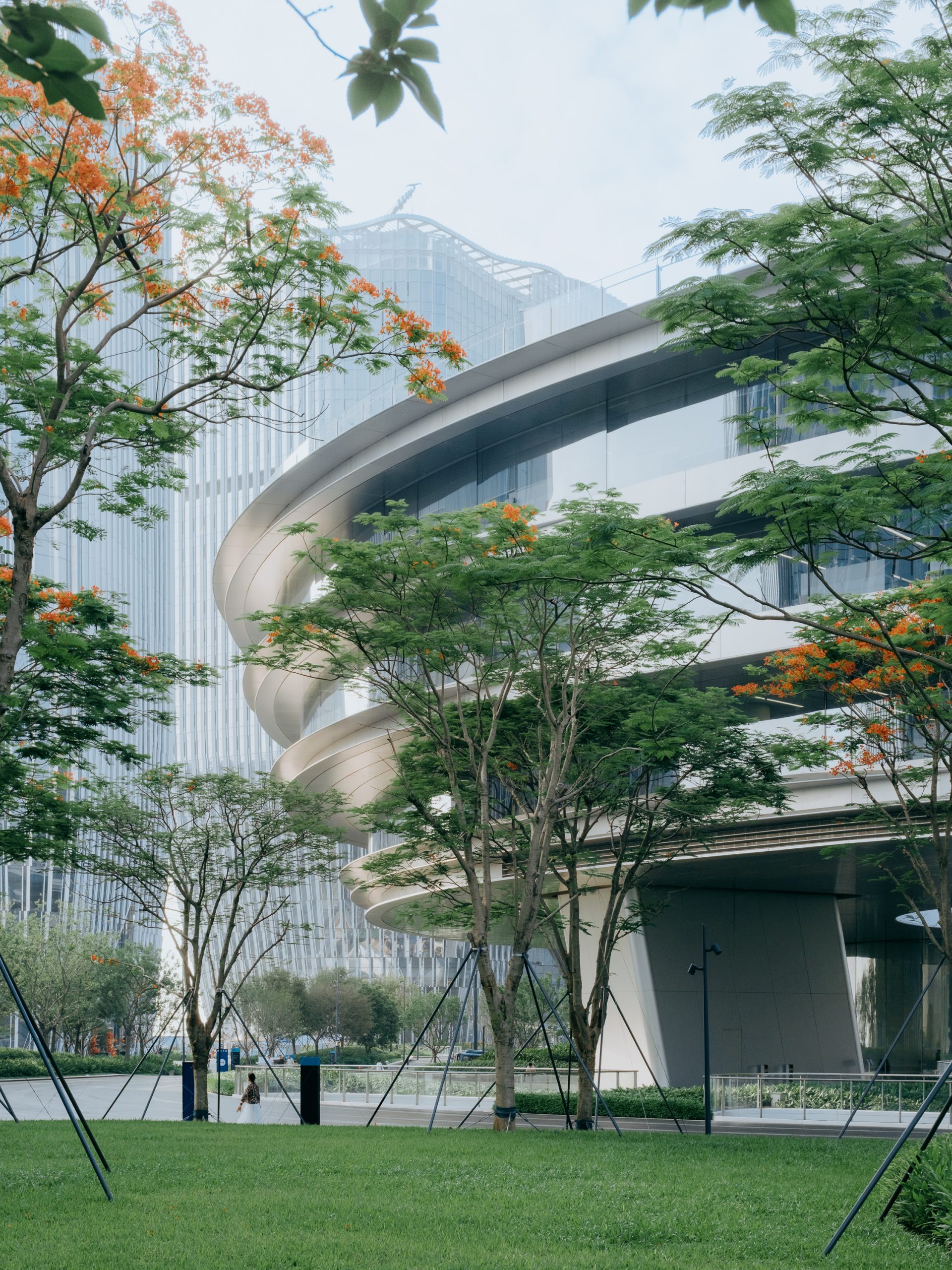
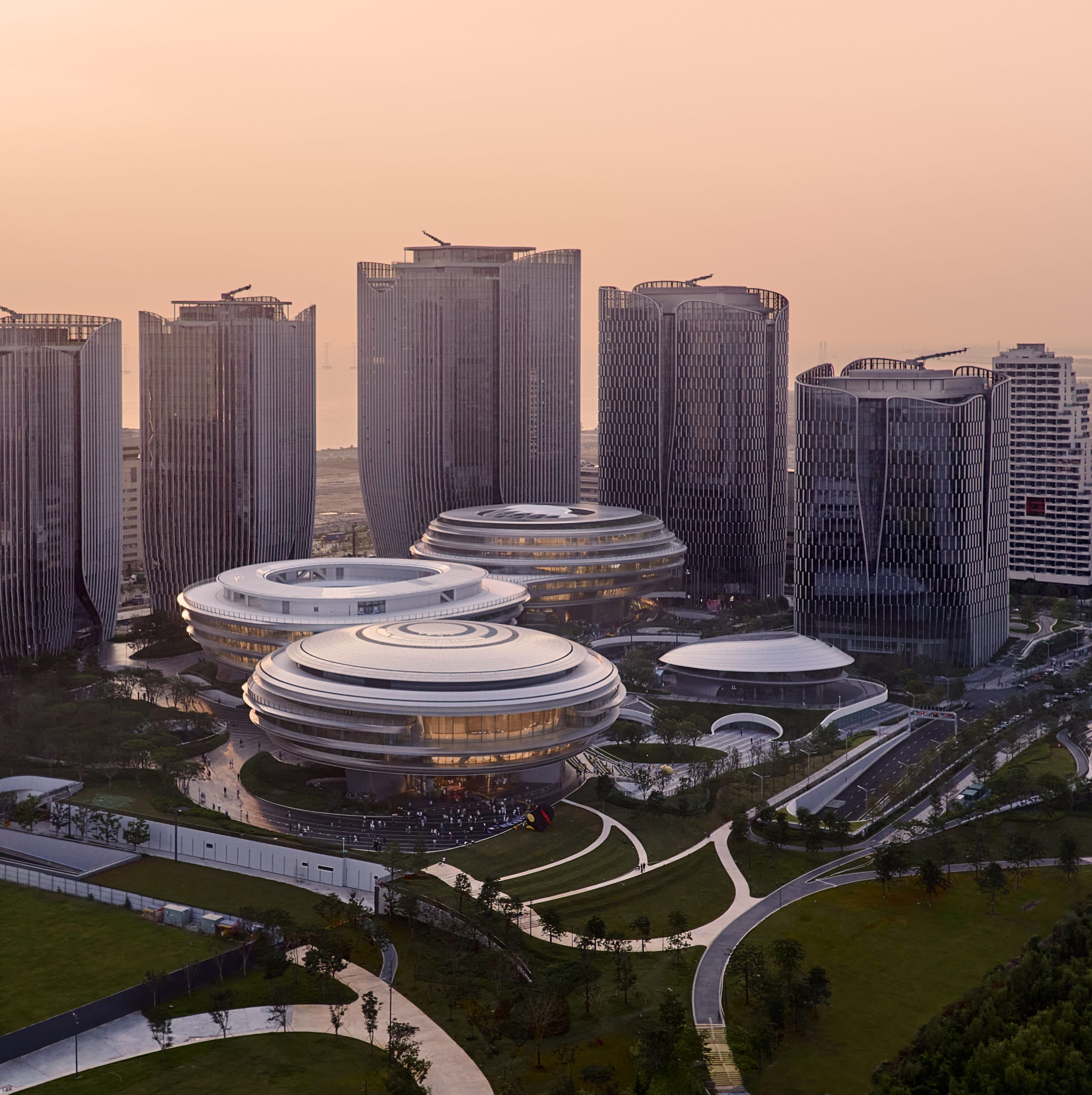
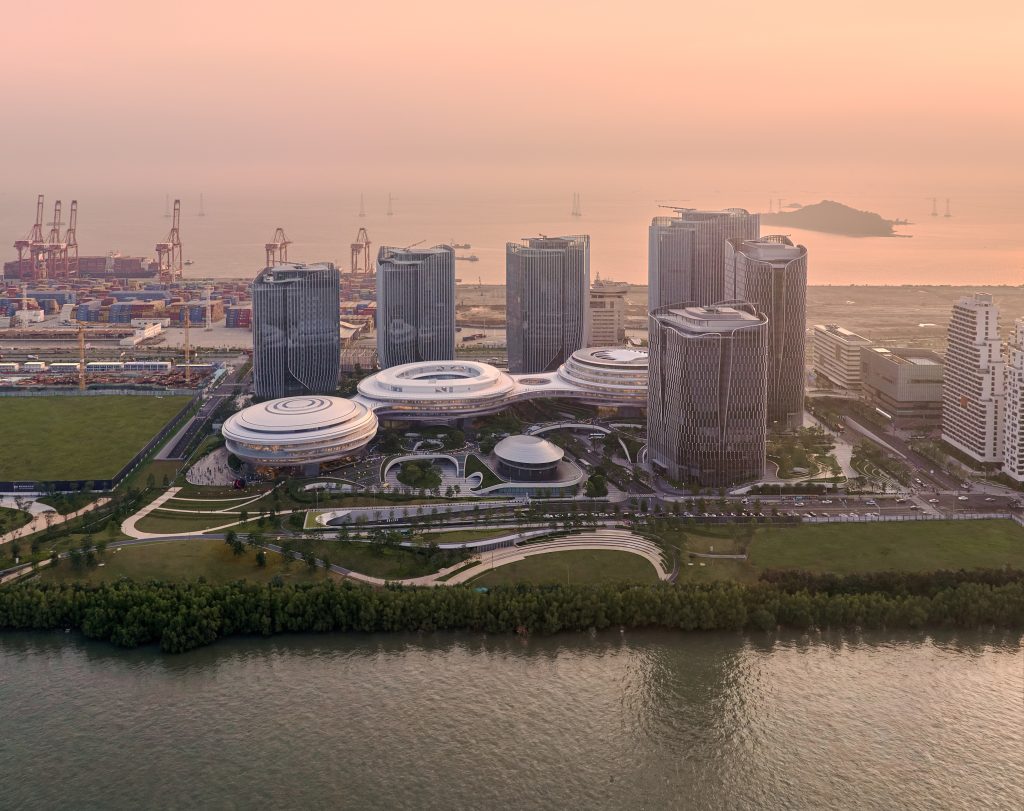
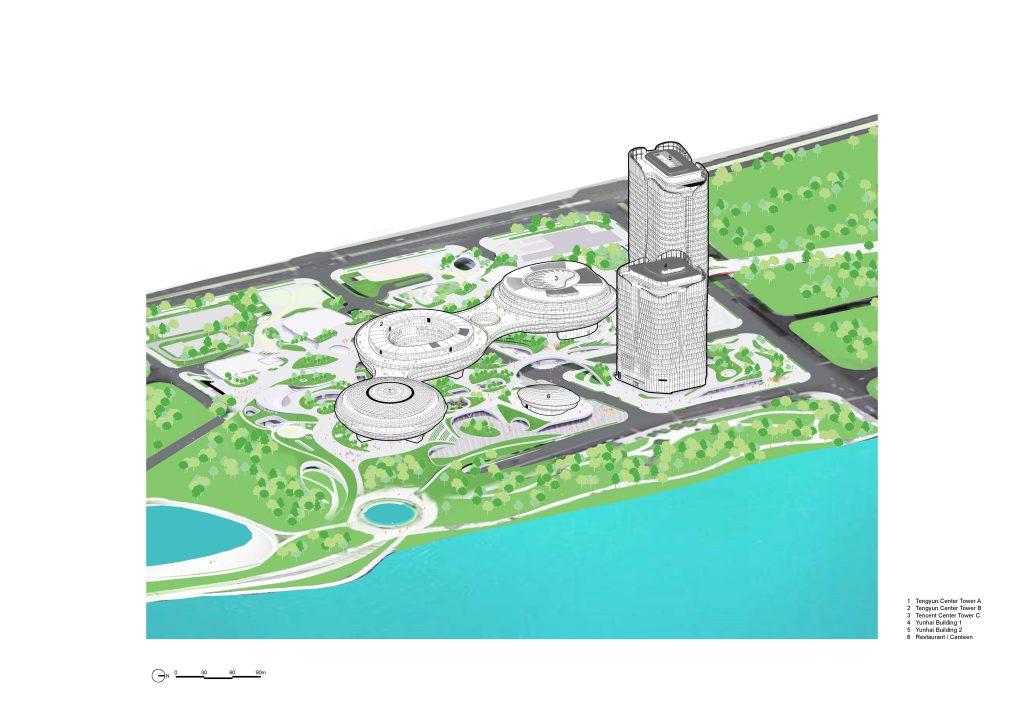
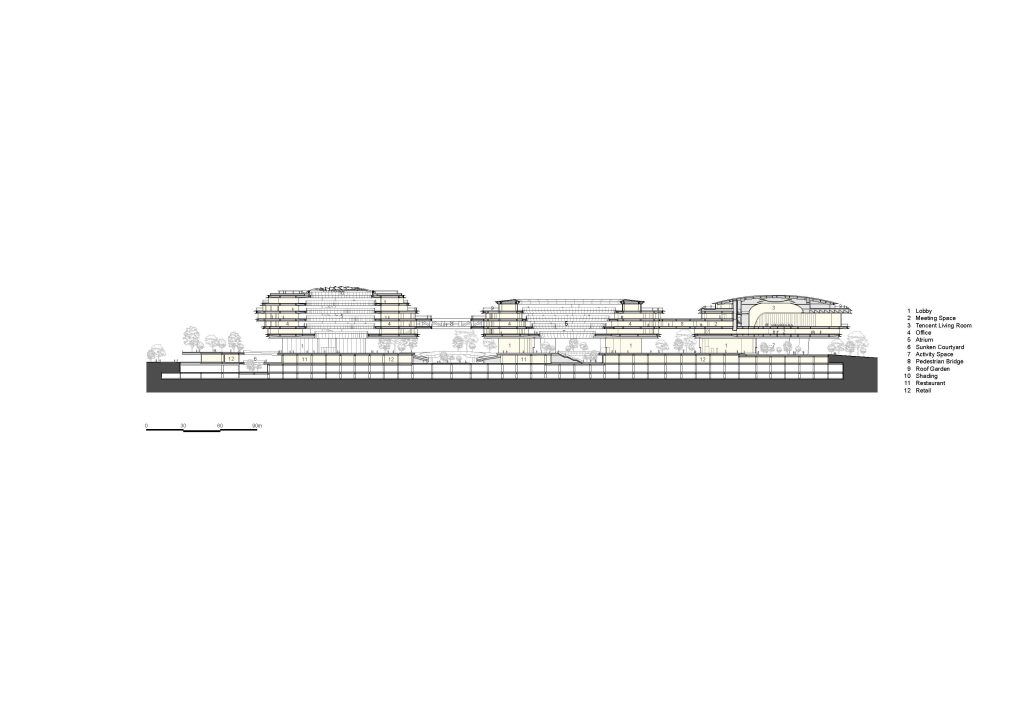
Tengyun Center (Tencent Cloudrise) begins with a question that is both architectural and urban: how can a headquarters for thousands of employees occupy a valuable coastal site while remaining part of public life? MAD’s answer is to raise the building and return the land to the city. Three interconnected “cloud” volumes are lifted approximately 8.6 meters above ground on ten structural cores, releasing, in effect, two full floors of space back to the city. Beneath them, the site opens into a continuous public landscape for walking, gathering, shade, and views of the sea. The ground, normally the most privatized surface of any corporate campus, becomes the project’s primary civic gift.
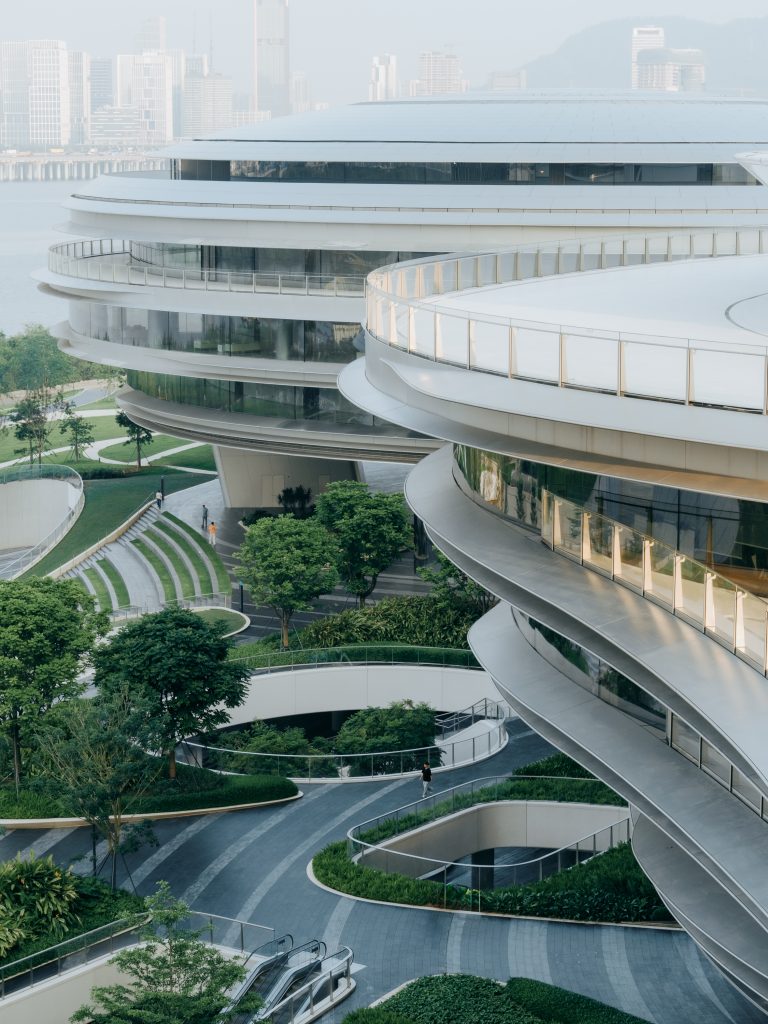
Three cloud buildings, one continuous urban field
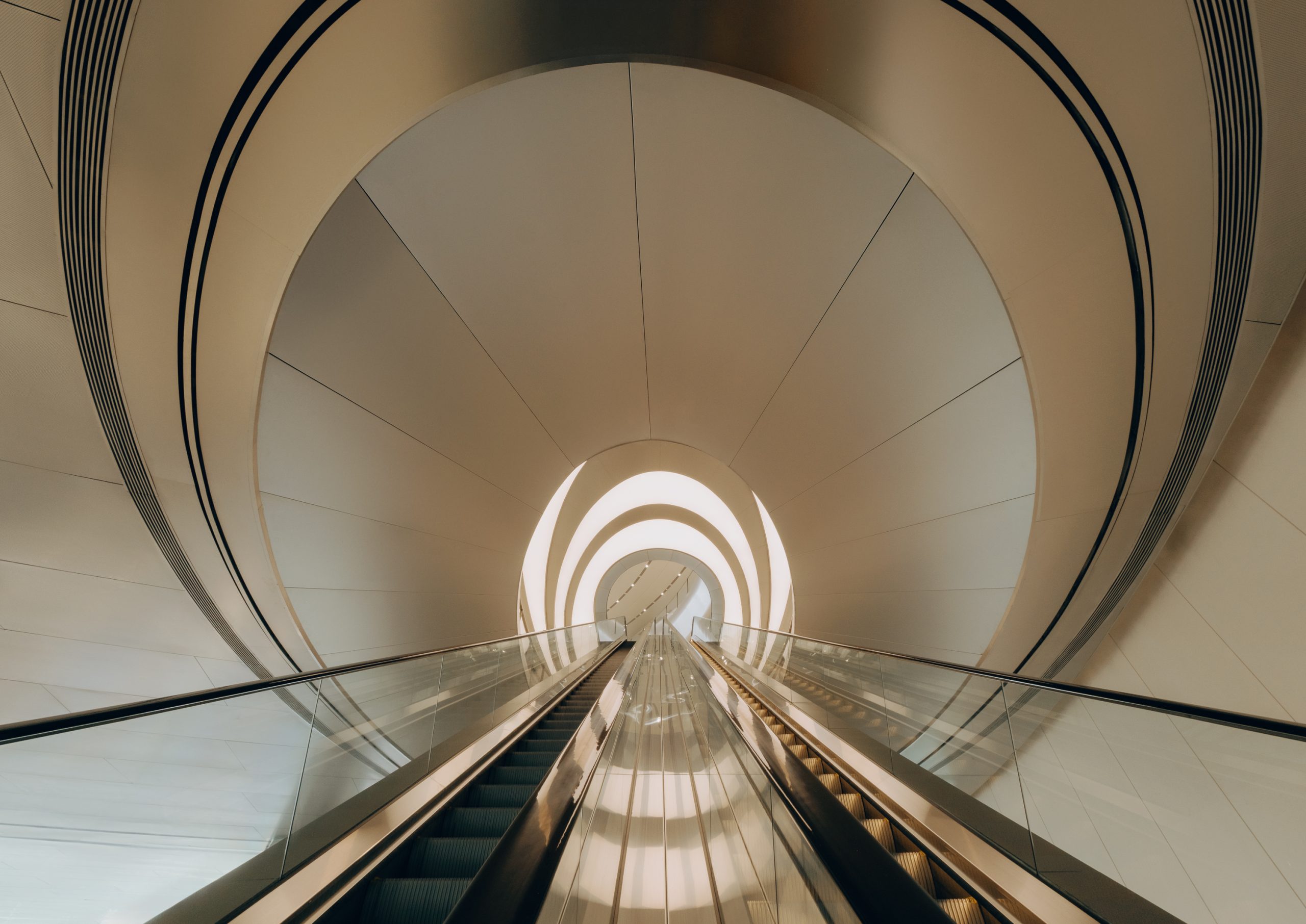
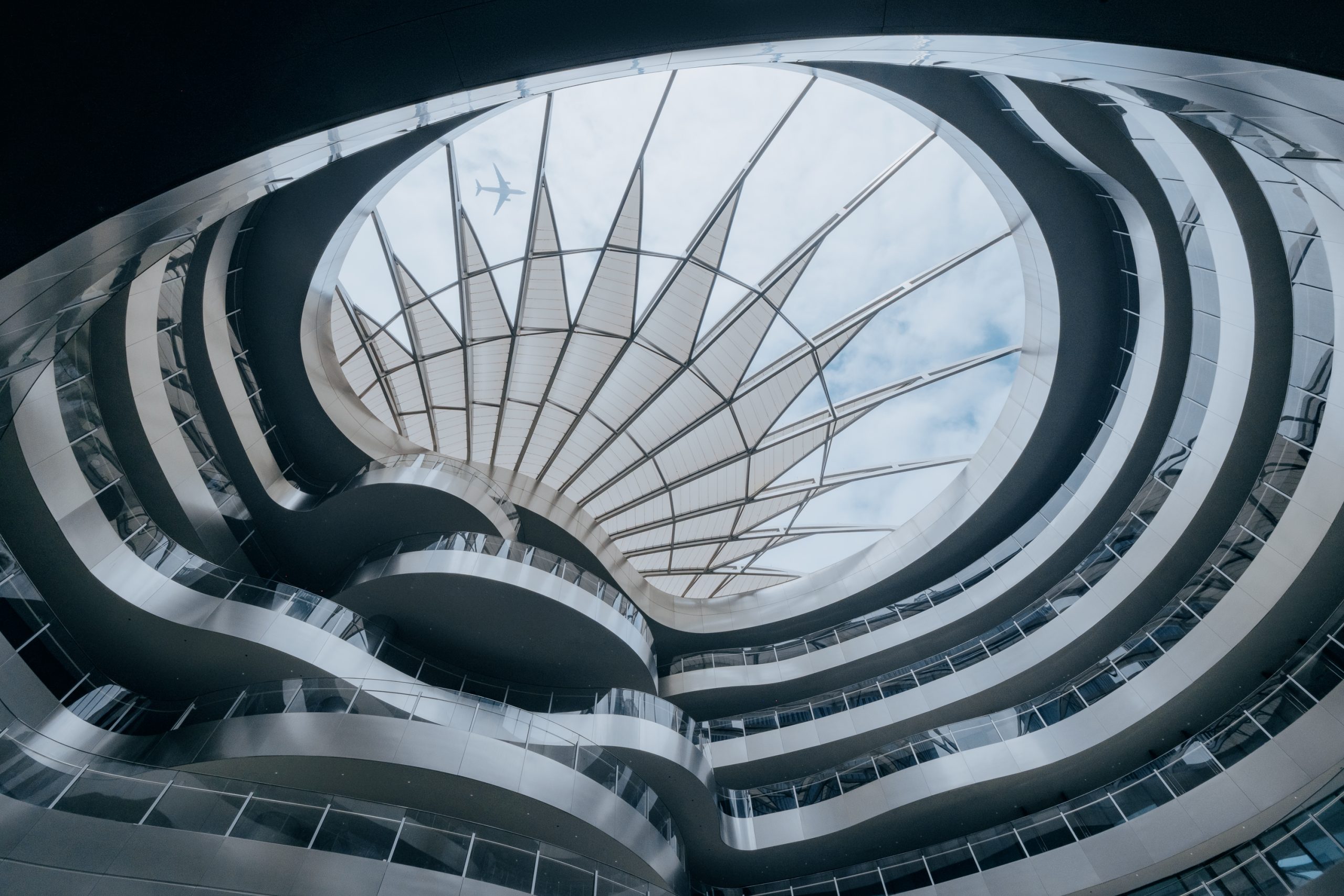
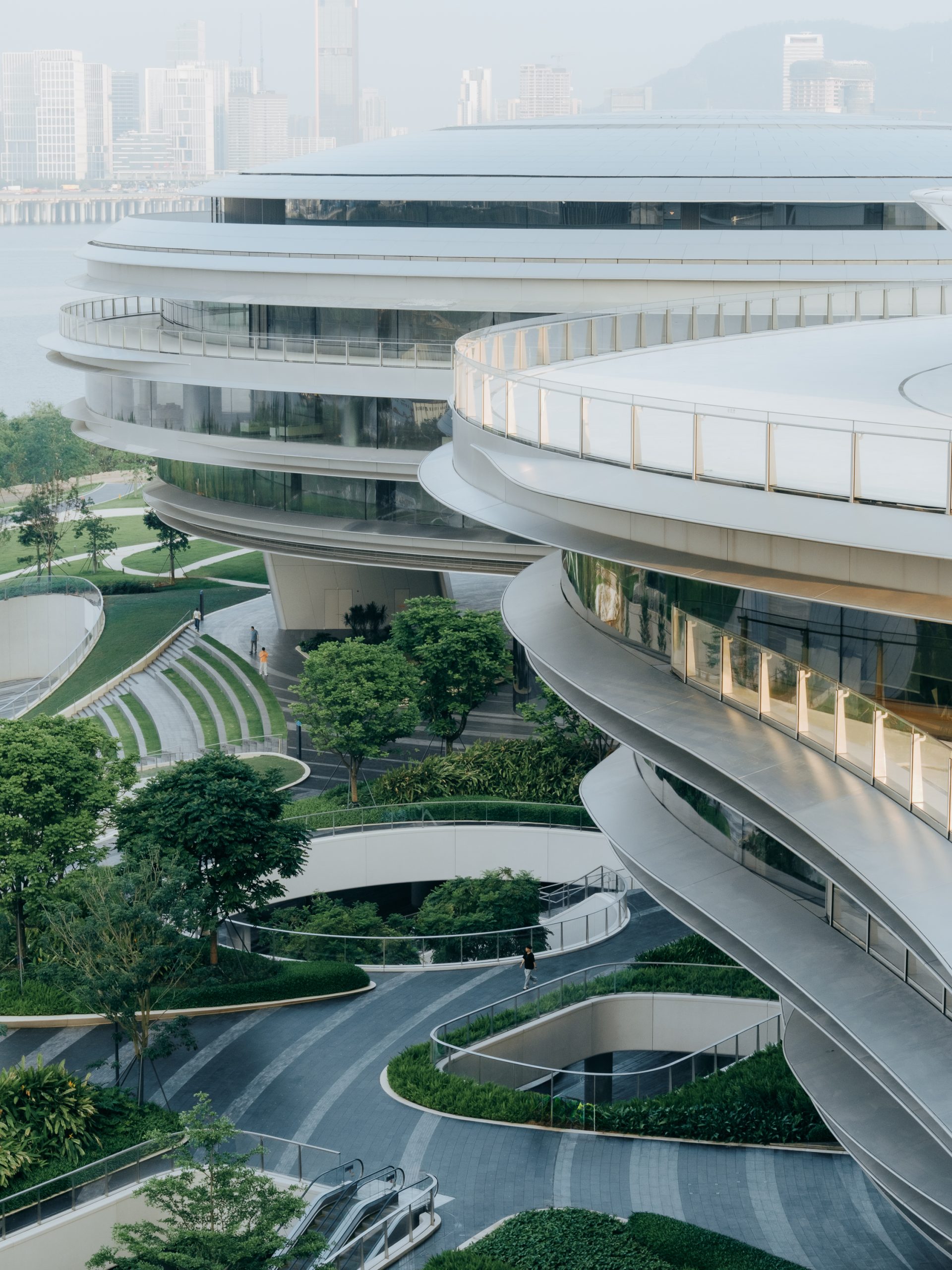
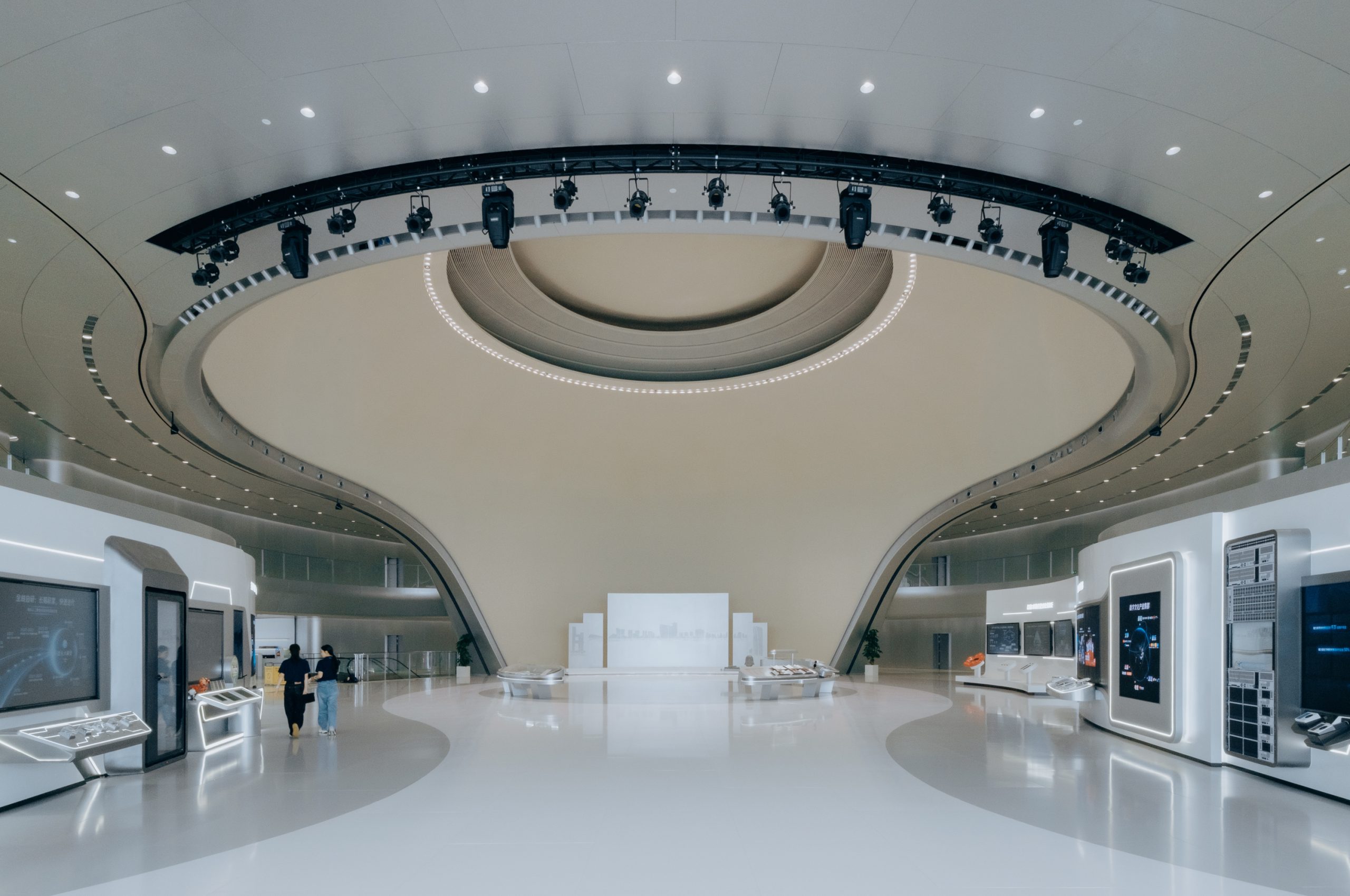
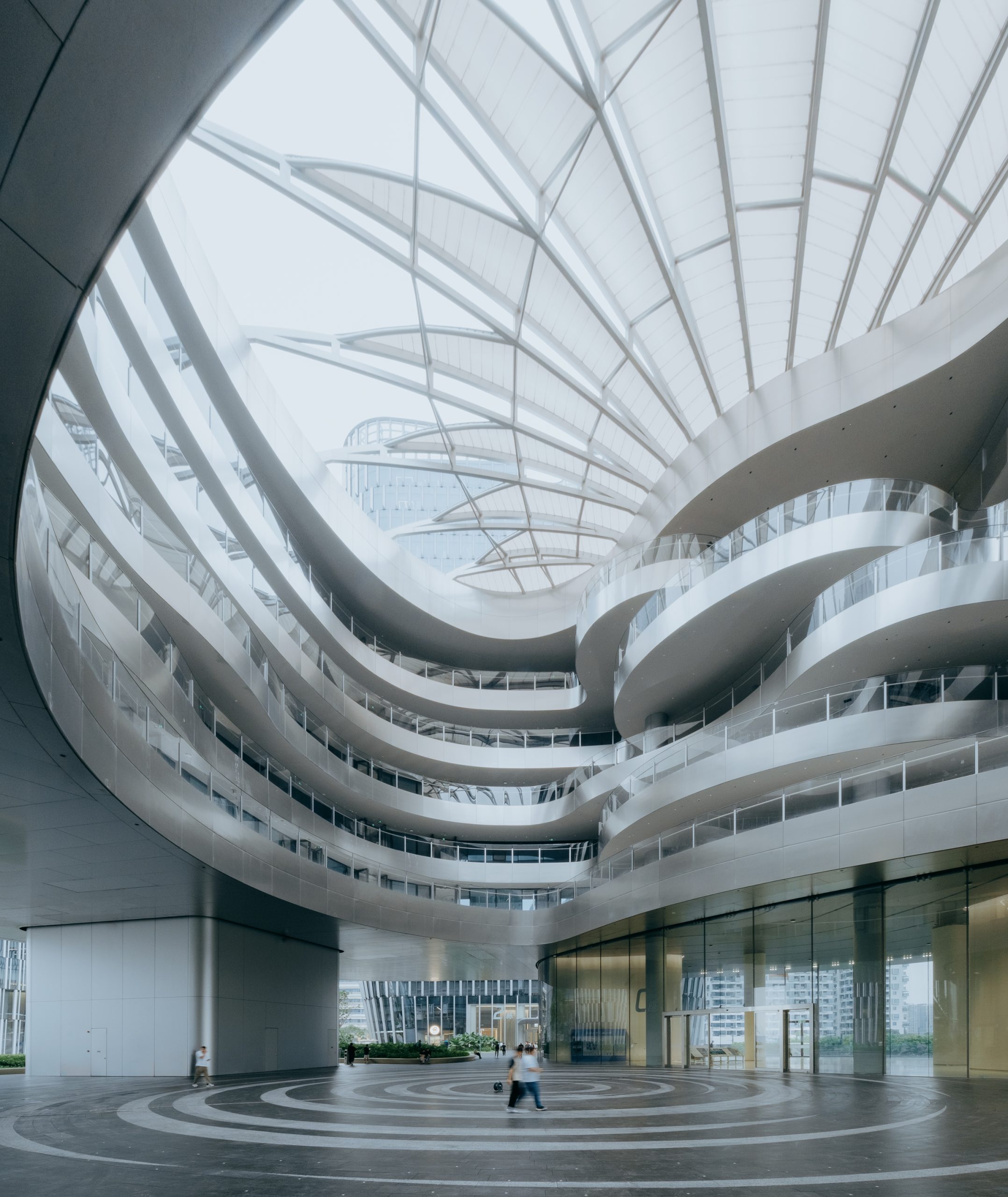
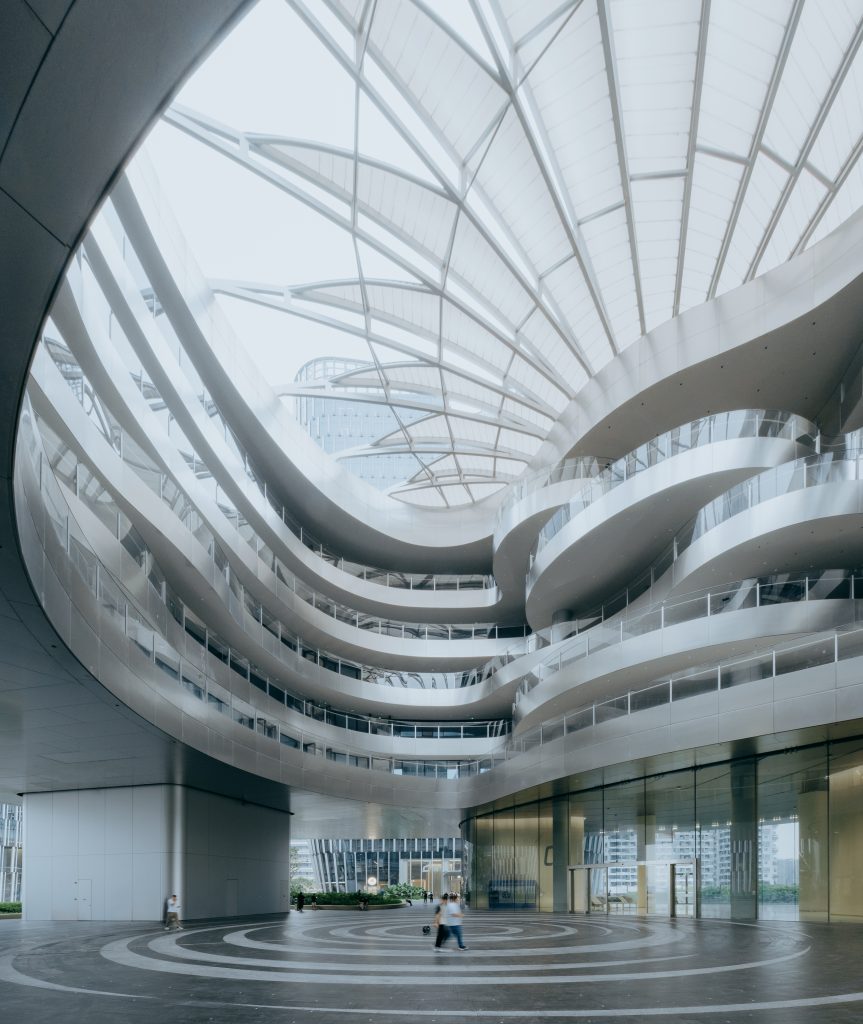
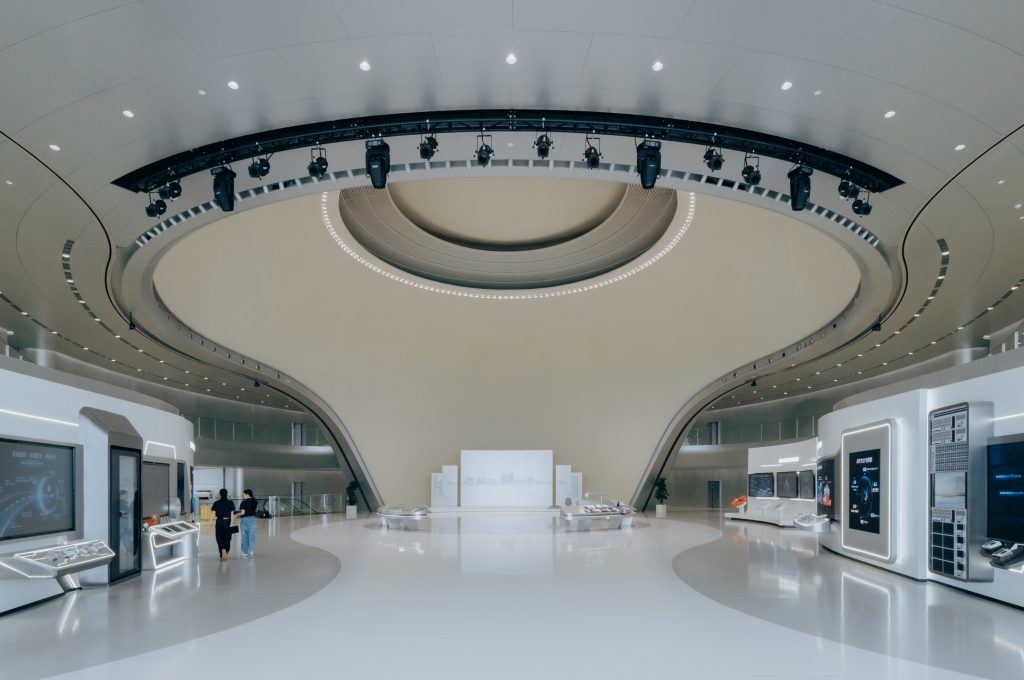
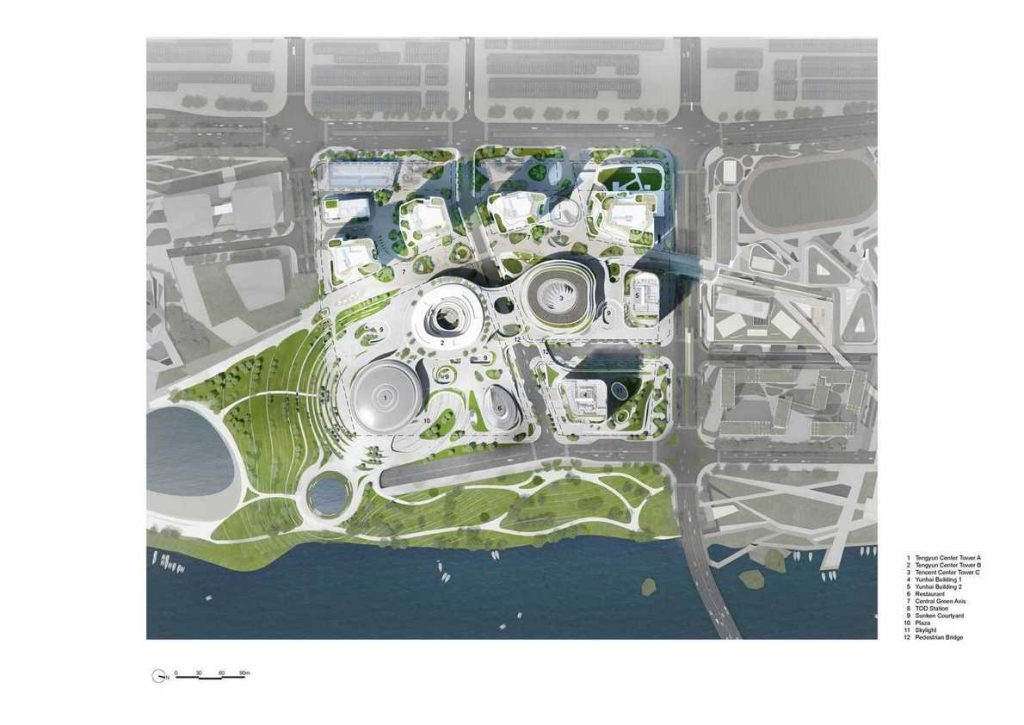
The headquarters is organized as three interconnected cloud-like volumes along a north–south axis, linked by elevated steel-truss bridges that double as places to pause, meet, and look toward the bay. The route through the campus shifts gradually in character, from city to garden, from shaded ground to elevated bridge, from workplace to coastline. The three volumes support different forms of collective use. The southern building holds exhibitions and multi-functional events, with a second-floor public room opening toward the bay. The central and northern buildings contain offices arranged around open atriums, including a semi-open, shell-shaped ETFE skylight that draws daylight into the northern building while filtering the strong coastal sun.
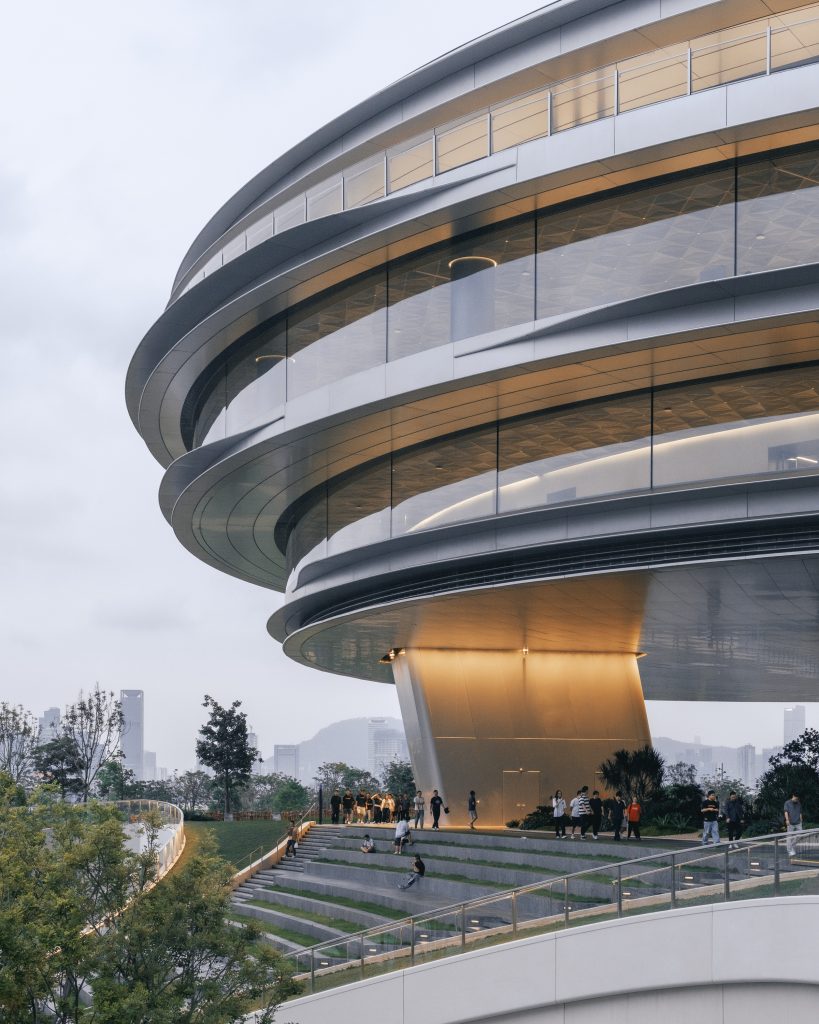
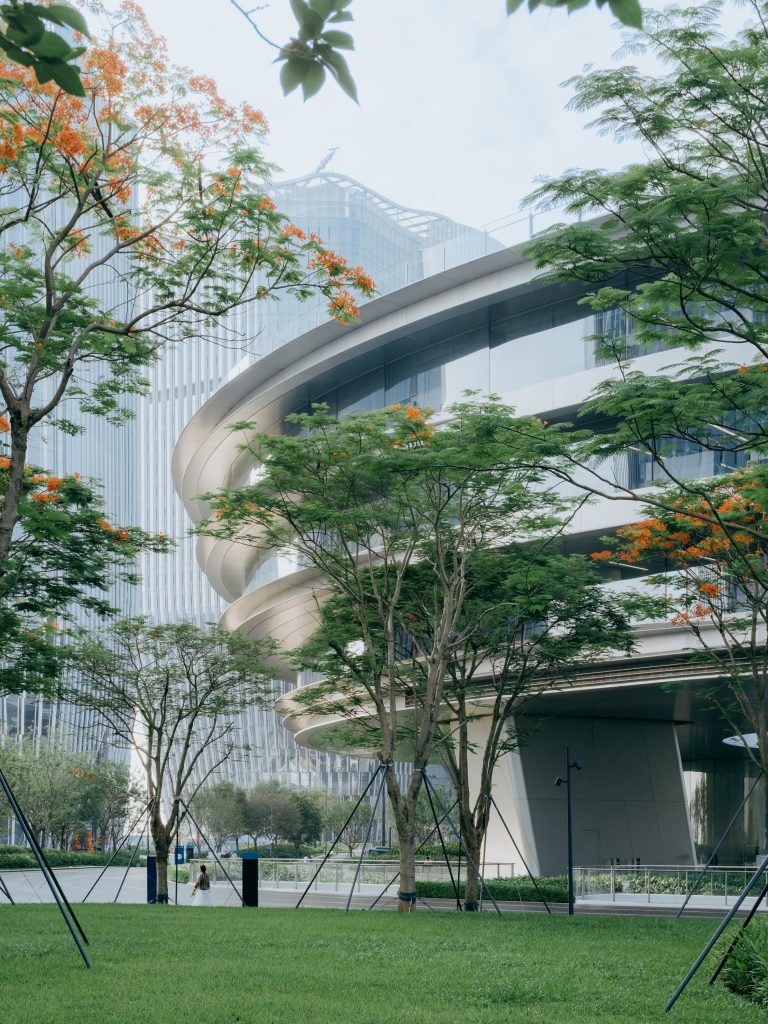
Work facing the sea — for everyone, not just executives
In most office towers, the sea view is a perk reserved for the corner office. Tengyun Center (Tencent Cloudrise) inverts that hierarchy. Approximately 80% of workstations face the sea. Circulation zones and shared amenities are also positioned to keep continuous visual access to the coastline, so the view belongs to the building as a whole rather than to its most senior occupants. Since trial operation began, around 14,000 Tencent employees have moved onto the site. The sea becomes a constant presence across the ordinary routines of work.
A public landscape instead of a corporate edge
At ground level, the project replaces conventional corporate frontage with an open landscape of lawns, planted slopes, shaded gardens, and pedestrian paths, creating a coastal park woven directly into the campus. The perimeter is intentionally dissolved, letting public space, workplace, and ecological zones interlock. The “open campus” here is not the Silicon Valley kind, which opens only to badge-holders. It is open to the city.
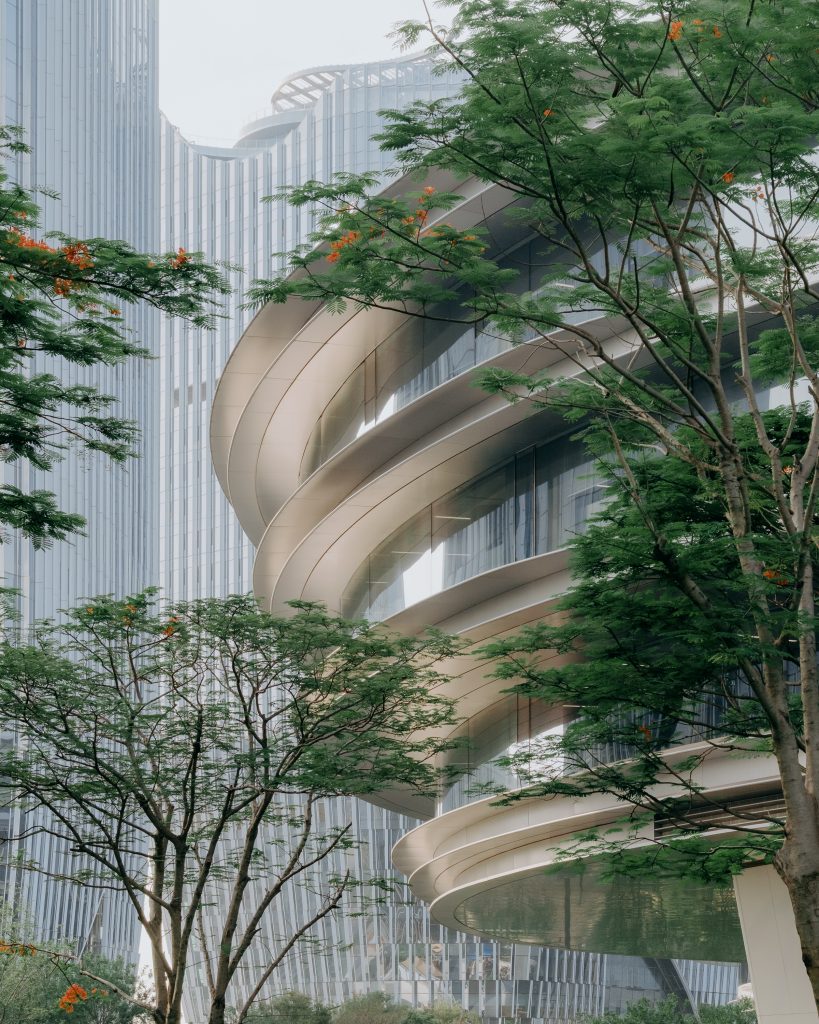
Built within an existing ecology
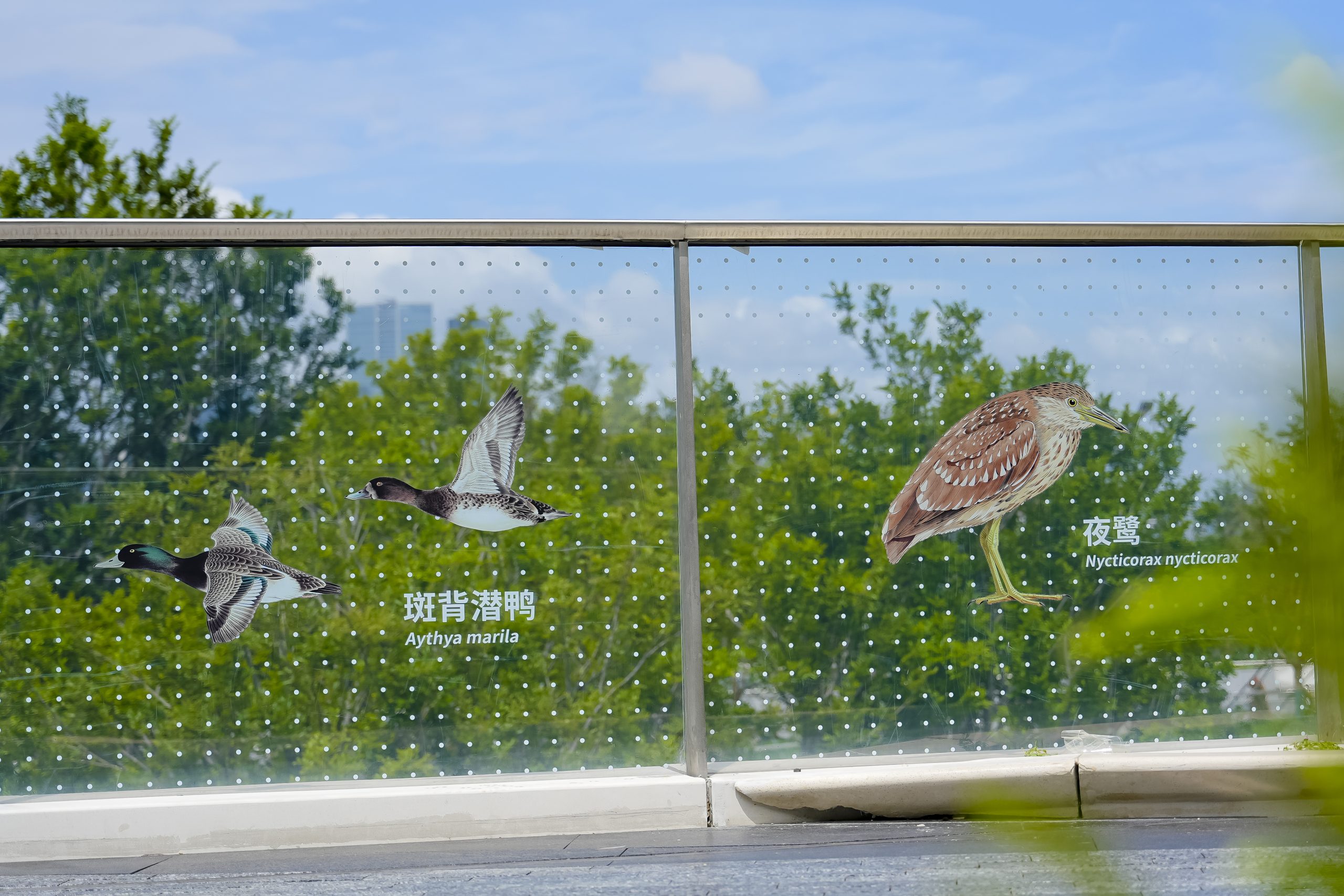
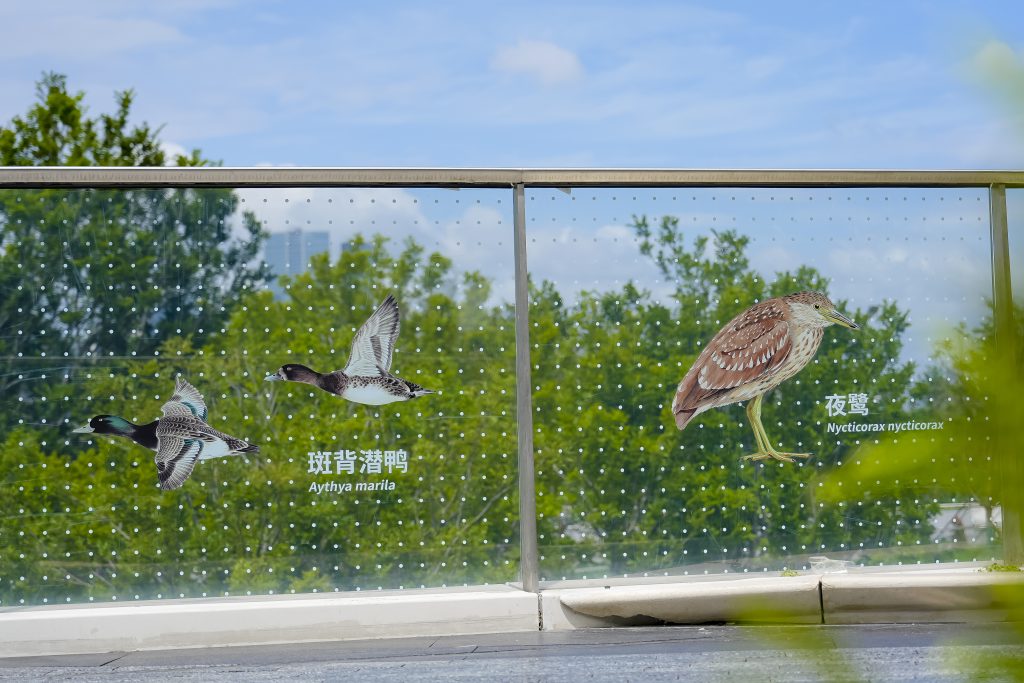
The campus sits within a living coastal ecology that the project works to keep intact. In coordination with a government-led coastal restoration effort, the site’s existing mangroves, tidal habitats, and bird migration routes are preserved within the daily life of the campus. The mangroves are the true original inhabitants of this reclaimed shoreline, a natural coastal barrier and a habitat for shorebirds and marine life. Rather than treating them as landscape material to be relocated or redesigned, the project keeps them where they are. The building opens its ground to the city above, and leaves the shoreline to the lives already there.
Structure in service of openness
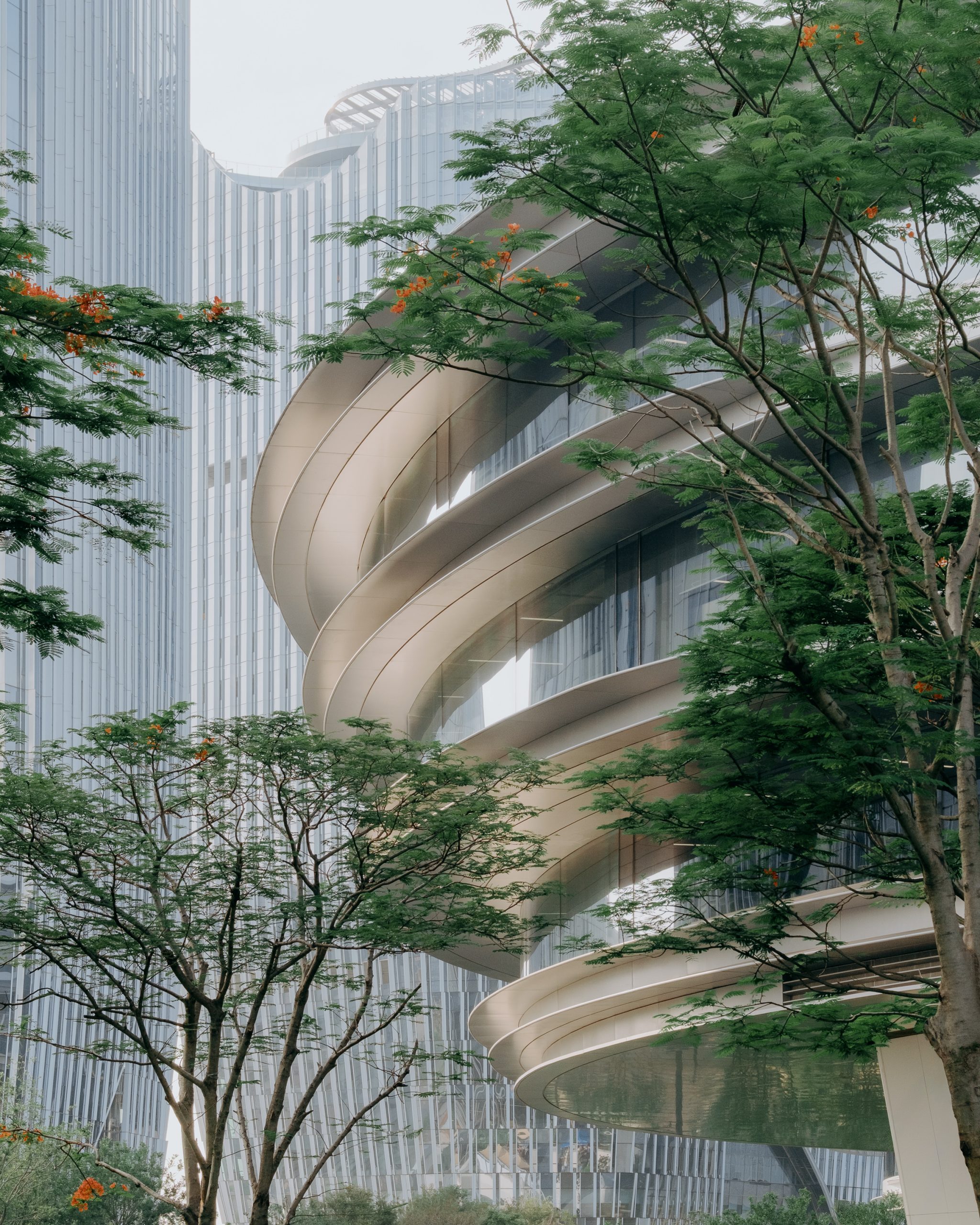
The structural and façade systems carry the same idea. Long-span structures keep the cloud buildings’ interiors unobstructed; steel-truss sky bridges connect the volumes above the public ground. Large-scale curved façades and frameless glazing reduce visual interruption toward the sea, while integrated horizontal shading follows the building’s curvature to cut solar exposure. The technical systems are not treated as separate expressions. They serve a single ambition: to keep work, movement, landscape, and climate in direct relationship.
A different idea of the corporate campus
Tengyun Center (Tencent Cloudrise) brings office space, public landscape, and coastal ecology into one spatial framework. MAD frames the headquarters as civic infrastructure: a workplace that opens its ground to the city, embeds nature into daily use, and supports public life along Shenzhen’s coastline. It is, in the end, a wager: that the most valuable thing a corporate headquarters can do with prime coastal land is to give most of it away.
Completion
Tengyun Center (Tencent Cloudrise) is part of Tencent’s broader headquarters campus across Qianhai and Da Chan Bay, with a total development scale of approximately 412,000 square meters (Lot 04 East) within a larger multi-phase district. The project is now complete and open, forming a new public-facing threshold between city and sea.