Architecture
The Quartet
Architect:
TEAM_BLDG; Xiao Lei, Deng Caiyi, Shen Ruijie
Place:
Songzhuang, Songyang County, Zhejiang Province
Year:
2025
Photographer:
Jonathan Leijonhufvud
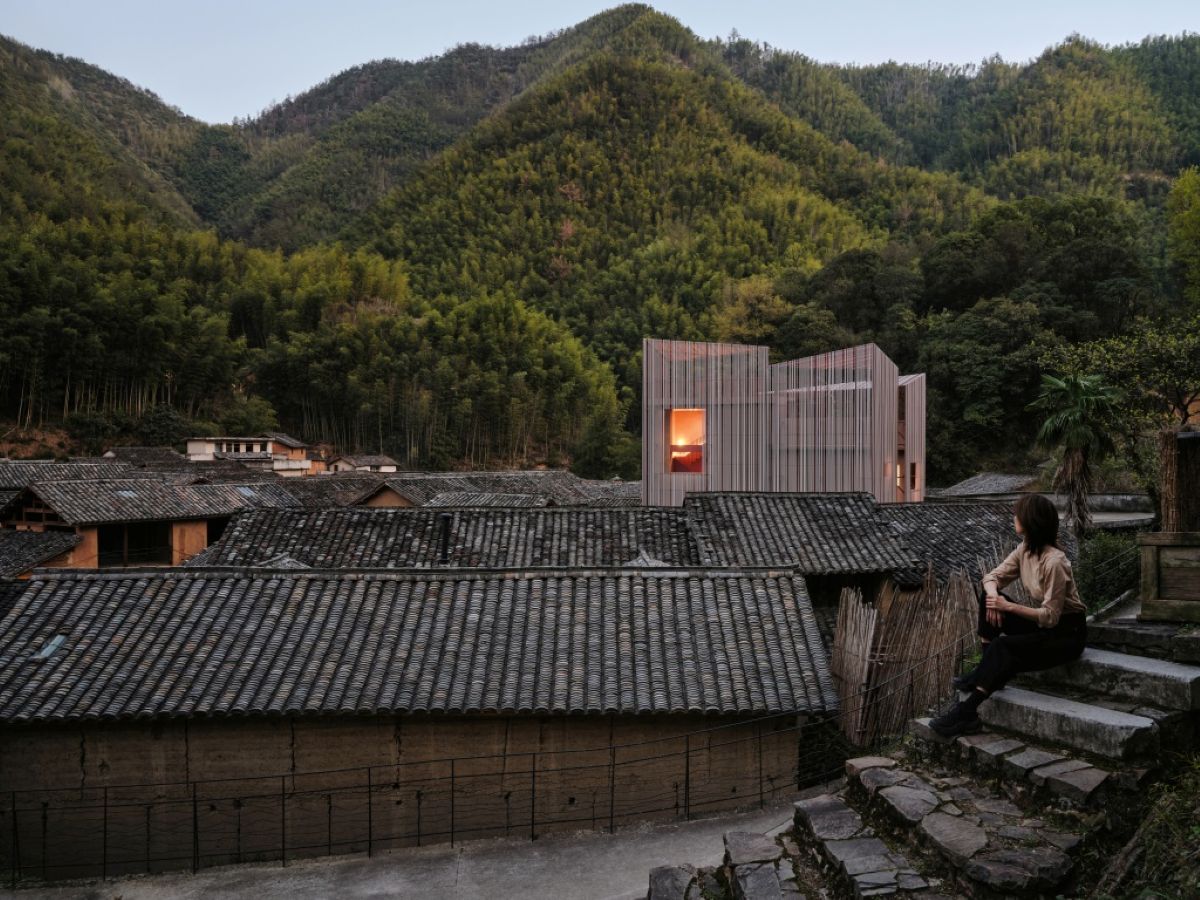
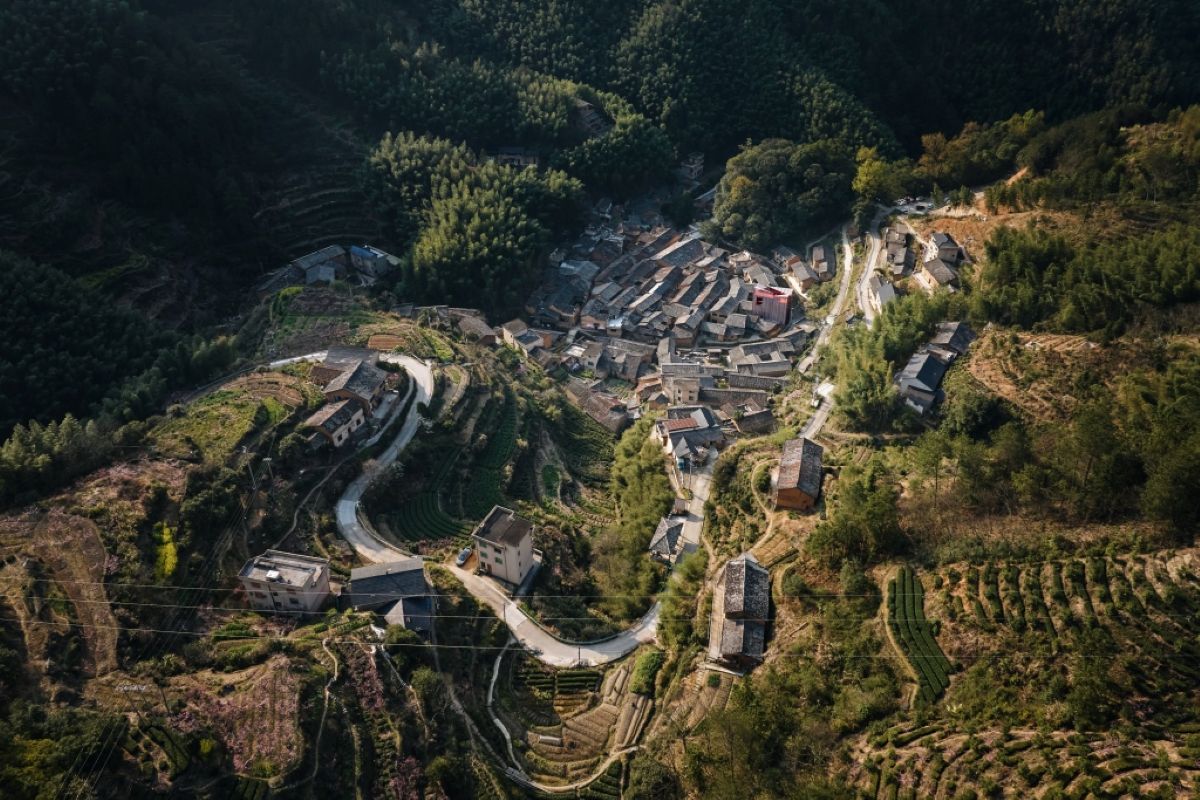
Located in Songzhuang Village, Songyang County, Zhejiang Province, the Z Museum, completed in April 2025, stands at over 400 m above sea level, nestled deep within a mountainous landscape of difficult access. Winding roads and narrow paths render arrival an almost initiatory experience, evoking a contemporary Peach Blossom Spring: the fable written in 421 AD by the poet Tao Yuanming, in which a fisherman discovers a secluded village cut off from the outside world, where people live in harmony with nature.

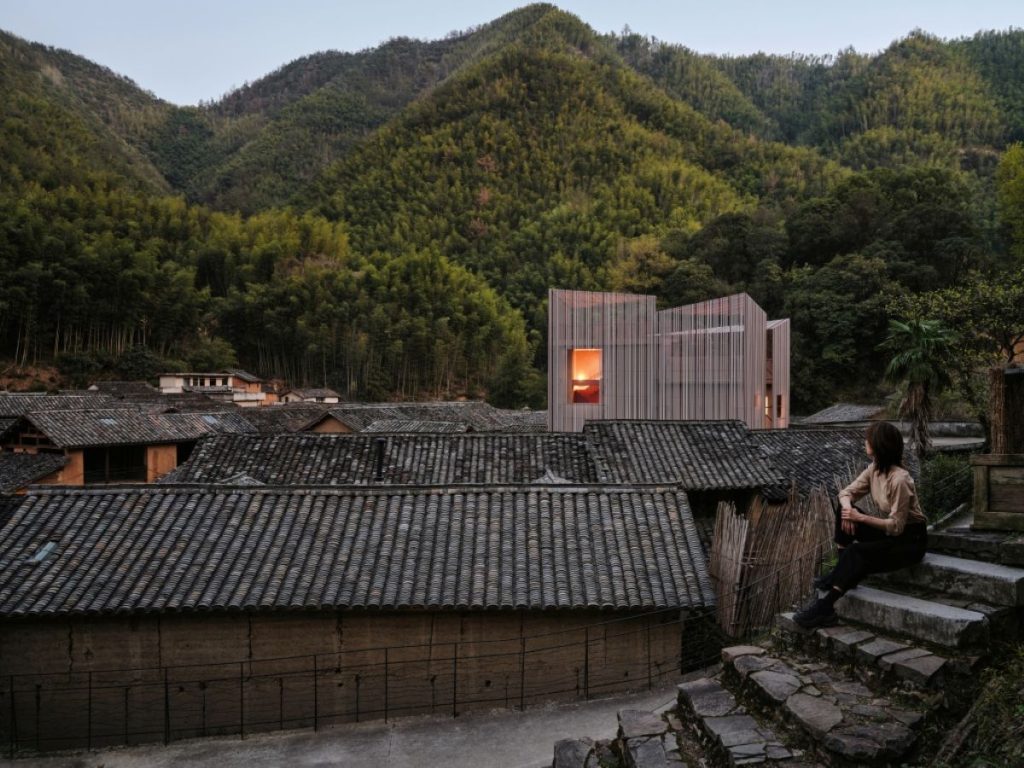
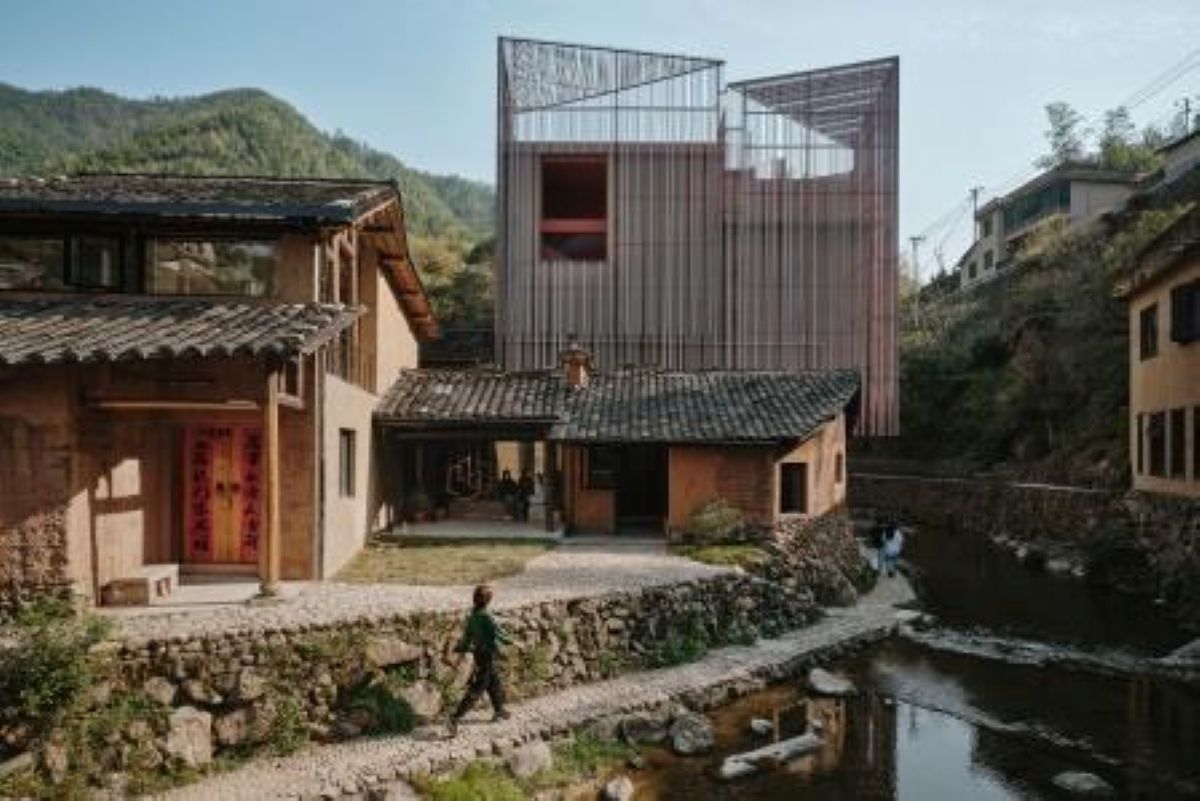
Prior to 2017, this place was unknown even to most residents of Songyang itself; such isolation has allowed the village to preserve much of its original character, retaining both its traditional architecture and its historic spatial fabric. In early 2024, firm TEAM_BLDG was invited to intervene in this 600-year-old village, transforming a brick-and-concrete residential building dating from the 1990s into the Z Museum – the first contemporary rural art museum in China dedicated to the theme of weaving. The intervention involves a total building area of 472 sqm, inserted within a context of high landscape and historical value. The original building occupied a prominent position within the village, standing in sharp contrast – both in scale and materials – to the low, continuous rows of traditional rammed-earth dwellings. Long abandoned and subject to several unrealized proposals for renovation, it was only with Mountain Creations’ initiative to convert it into a museum that a clear architectural vision took shape. From the outset, the client articulated a precise design direction: since the building’s incongruity with its surroundings was an established fact, the project should not attempt to conceal or mitigate it, but rather to emphasize it – rendering it legible and memorable. At the same time, this contrast should remain measured and graceful, resonating both with the institutional nature of a museum and with the character of the village.
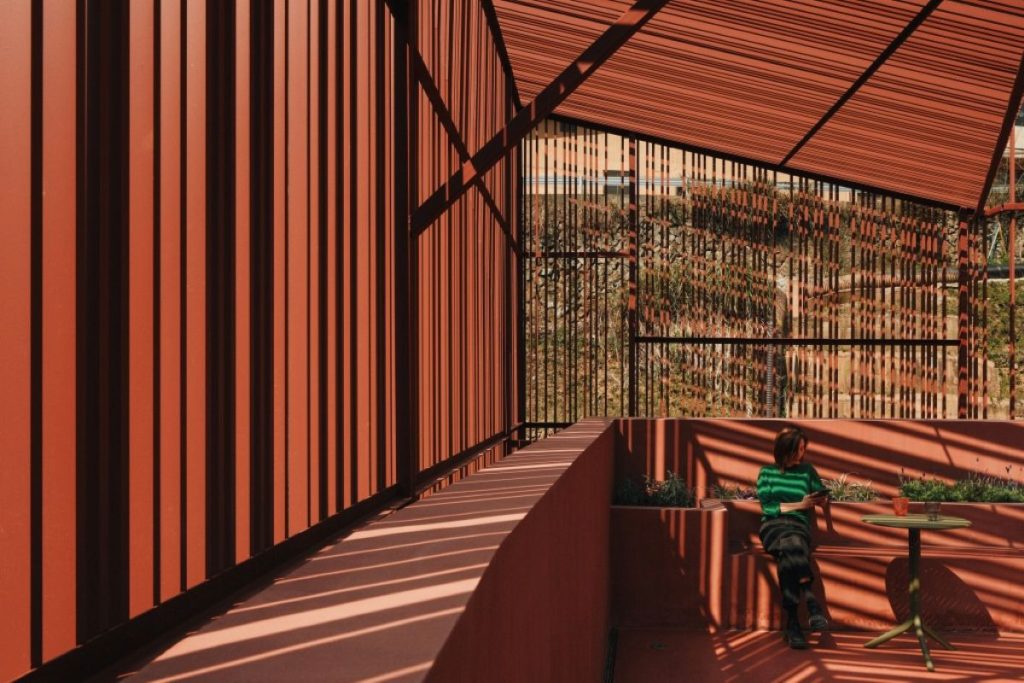
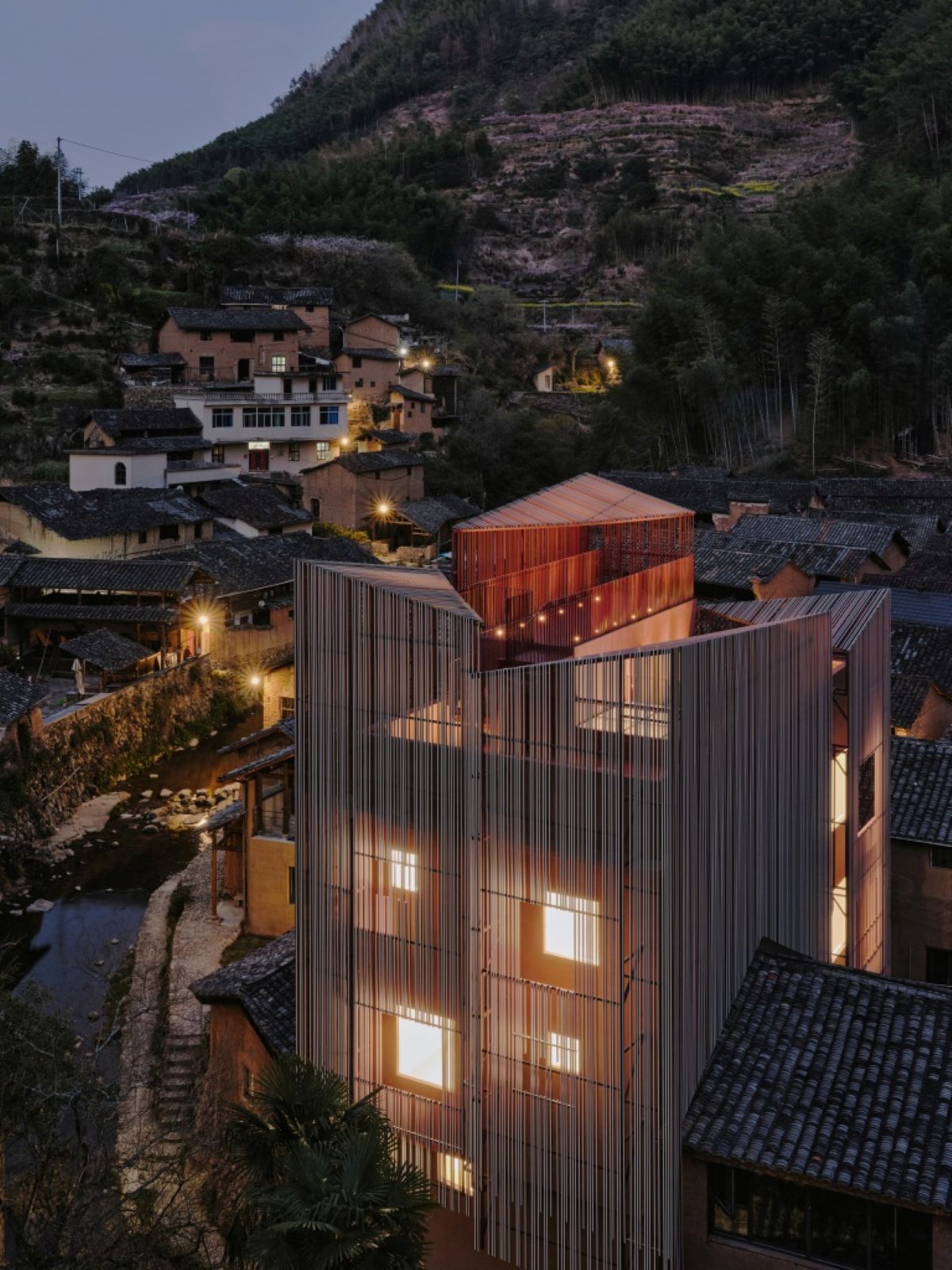
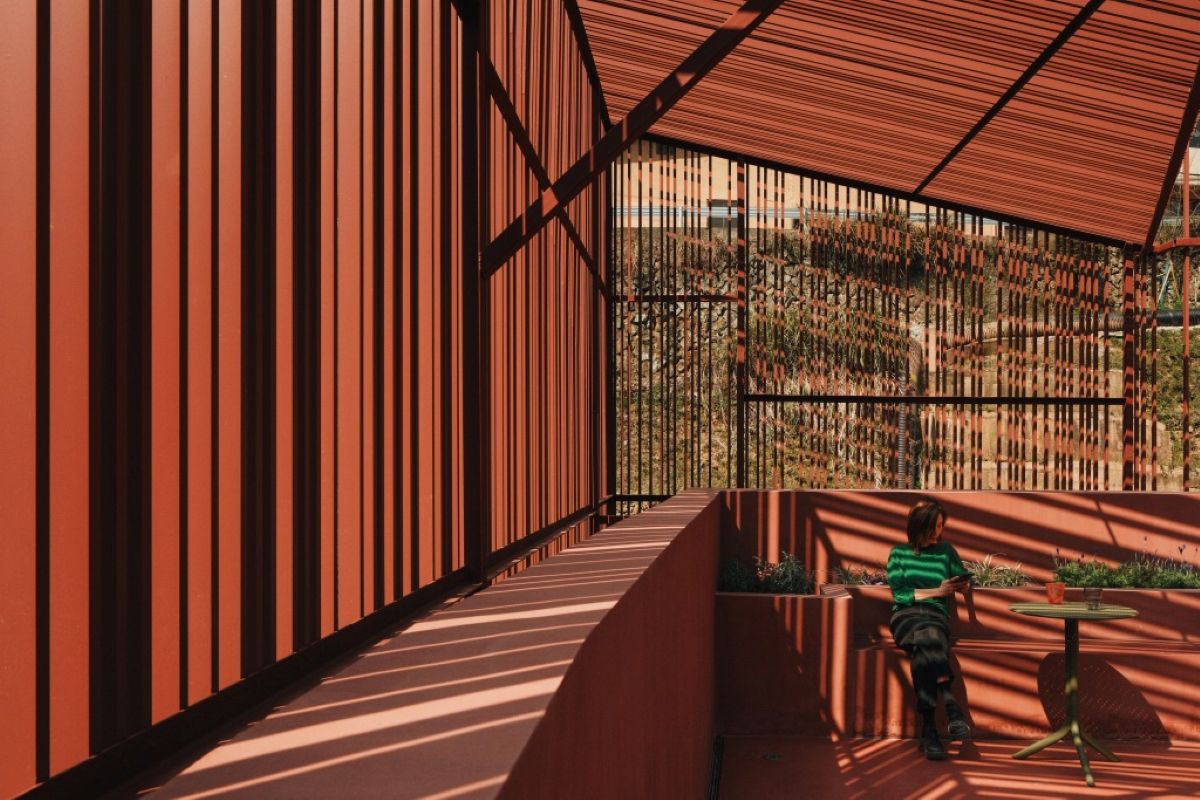
Confronted with the compact and rigid mass of the original façade, the design adopted a deconstructive strategy. Drawing inspiration from the scale and spatial rhythm of the surrounding traditional houses, the building was vertically subdivided into four volumes, with inner courtyards inserted in between. These volumes are interconnected both vertically and horizontally, while rooftop terraces and semi-transparent shading canopies were introduced to generate a dynamic composition of staggered heights – described by the architects as a quartet of forms. To visually lighten the building mass, the project draws directly on the language of traditional textile weaving. Square aluminum tubes measuring 20 × 40 mm, painted red on three sides and white on one, are arranged into a fine lattice that wraps the entire volume. Structural elements fixed to the façade evoke the shuttles of a loom, guiding the interplay of warp and weft and producing a bi-colored architectural skin that is at once delicate and diaphanous. To avoid an overly rational or mechanical appearance, the spacing of the slats was deliberately varied: denser in the upper portions and more open below. On the terrace levels, the lattice acquires a three-dimensional quality, further intensifying the perception of a woven surface.
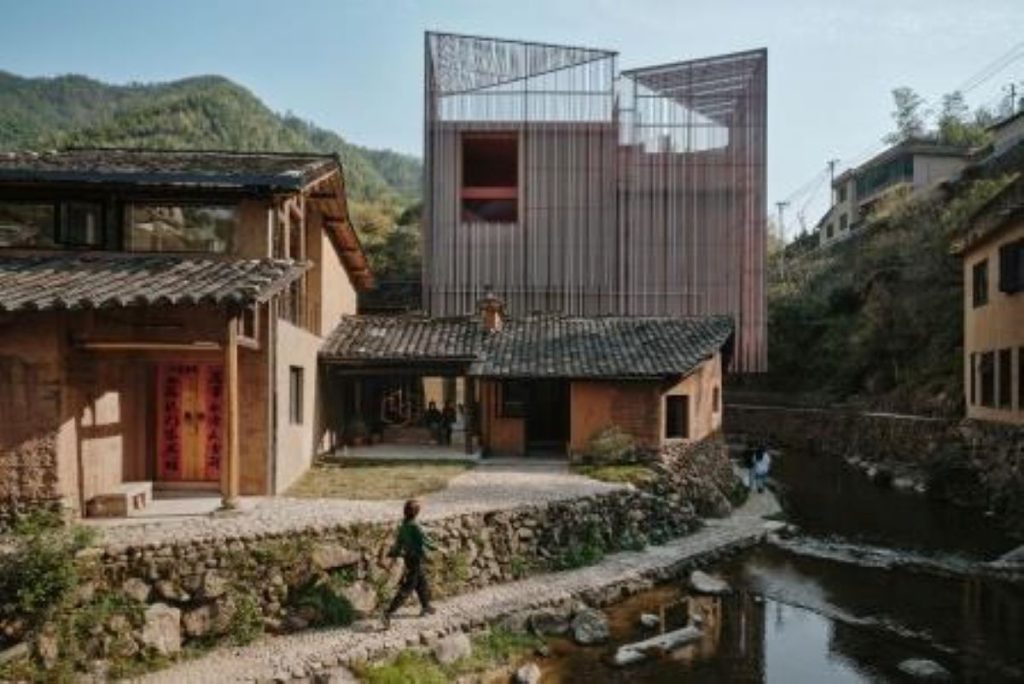
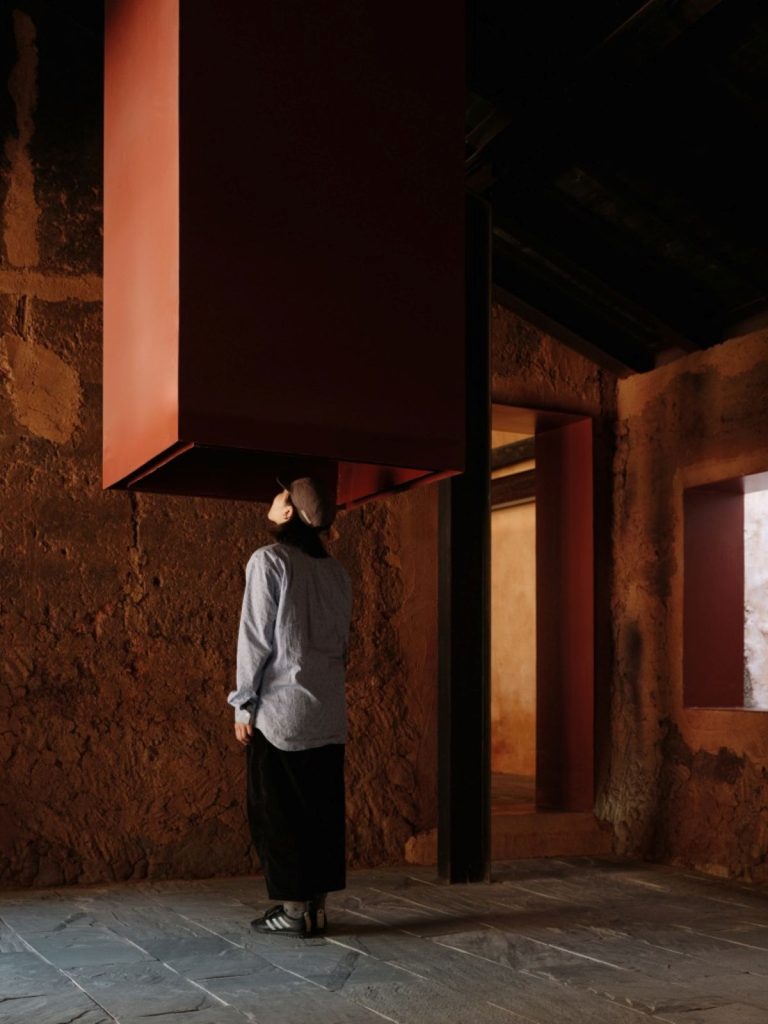
Through the chromatic orientation of the aluminum slats, the building skin changes over the course of the day. In the early morning, light and shadow are woven across the façade; on bright afternoons, the museum appears as a translucent, pink-hued volume, while on rainy or snowy days it becomes a compact, almost monochromatic monolith. The interior design is characterized by intentionally minimized interventions, prioritizing spatial clarity and the relationship between interior and exterior spaces. The visitor journey begins in an adjacent rammed-earth structure, where a compact, dimly lit introductory space has been inserted. Aside from a few targeted additions – such as red-painted steel window frames and a traditional tiger window – the original appearance of the structure has been largely preserved, functioning as a sensory threshold to the contemporary language of the museum. Within the main building, a new vertical atrium – a true light well – extends through all three levels, allowing natural light and ambient warmth to penetrate deep into the interior while establishing visual and spatial continuity between floors. The exhibition galleries are organized around this central void, allowing visitors to glimpse one another’s movement across different levels.
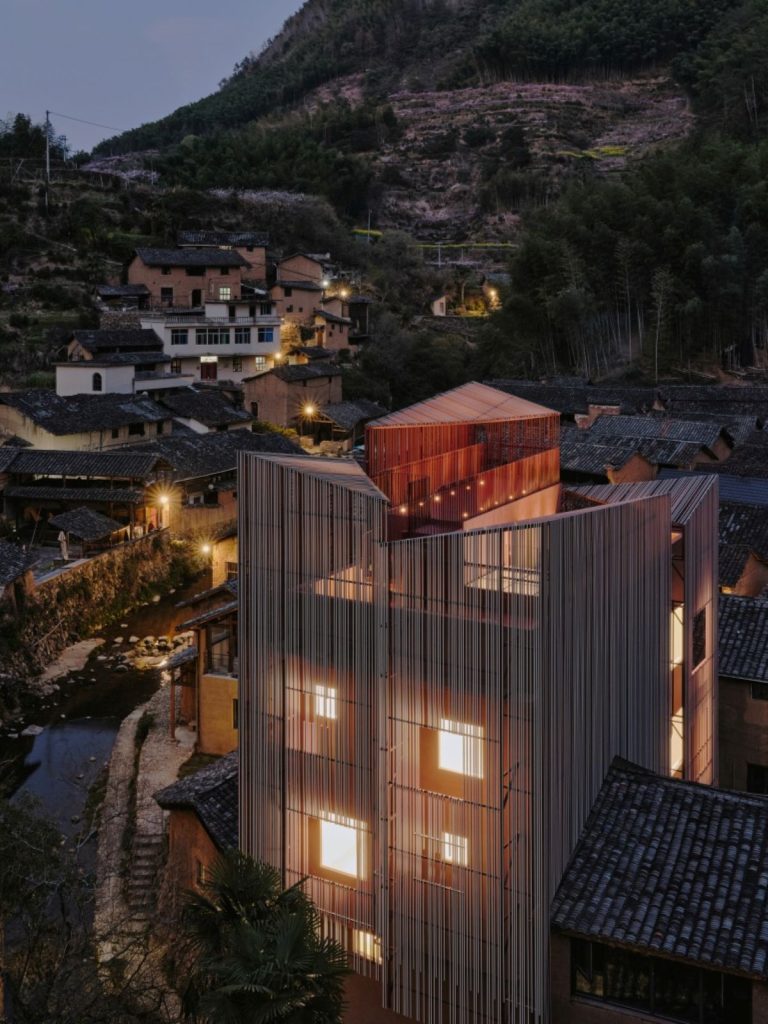
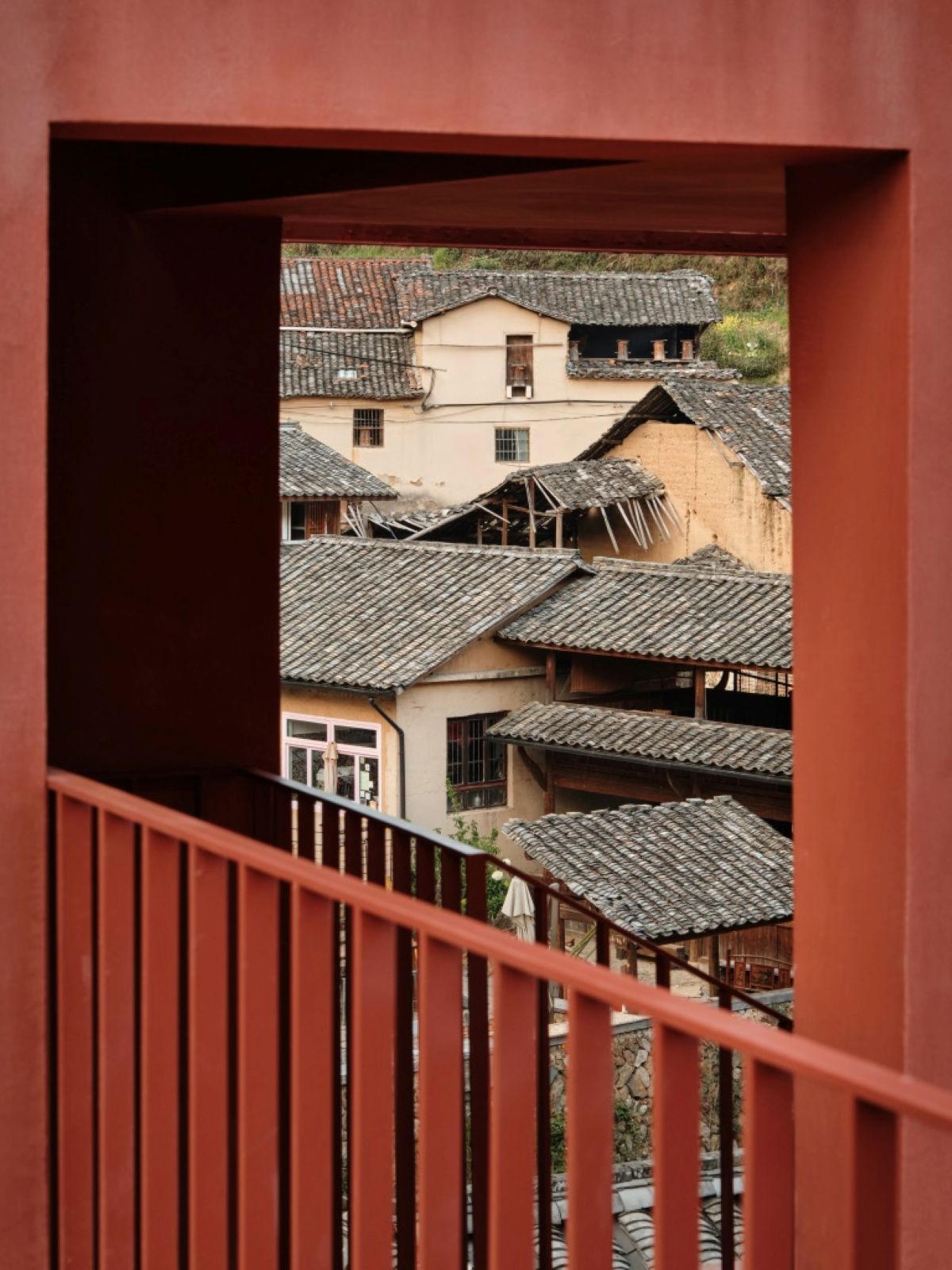
Original window openings were reconfigured in response to the surrounding landscape, adopting a strategy of secondary framing that allows curated views of the village 108 to dialogue with the exhibited works. Meanwhile, large new openings were carved into the external wall of the stairwell, transforming the third level into a semi-outdoor space that reinforces the museum’s relationship with its rural context. The rooftop terrace offers panoramic views over Songzhuang Village. Here, the absence of rigid functional zoning and the uniformity of the materials encourage a free and informal use of space, allowing changes in level to subtly guide behavior and enabling visitors to fully experience nature and relaxation. A bespoke furniture system designed for the museum’s café and bookshop extends the weaving concept into the interior: steel frames are wrapped with tensioned red woven straps, whose rhythm echoes that of the façade, establishing a conceptual continuity between exterior and interior. Within this careful balance of respect, contrast, and reinterpretation lies the project’s broader significance: an architectural approach capable of reinforcing the identity of a place without fossilizing it, fostering a cultural and spatial continuity that integrates memory, landscape, and transformation.